in conversation with
Gabriele Jacobs
Gabriele Jacobs (b. 1997, South Africa) is a multidisciplinary artist whose practice engages with myth-making, animality and the construction of queer ecologies. Drawing from both natural and imagined worlds, Jacobs builds a visual language where bodies - human, animal and hybrid - become sites of transformation and resistance.
Working across sculpture and painting, Jacobs often employs processes of fragmentation and reassembly, producing forms that appear simultaneously familiar and estranged. Their creatures - part myth, part organism - inhabit spaces that feel speculative, as though belonging to parallel ecosystems governed by different ideals of desire and survival.
On a windy Saturday afternoon, we sat with Gabriele to talk about the innate themes surrounding their work and navigating the space between tenderness and estrangement.

NZ: So, touching on your first solo at Lemkus in 2024, you know I love that painting, the two-headed dog. I think I’ve asked you about it multiple times at this point. That show was curated by Jared Leite, and I imagine you got a lot of references to the Laura Gilpin poem about the two-headed calf. Was that the inspiration, or what actually brought that work about?
It wasn’t directly inspired by the poem, although I do really love it. The painting came more from a continuation of the theoretical work I was doing during my master’s. I was thinking about monsters in classical mythology — how they’re typically vilified and positioned as obstacles for a righteous male hero to overcome, rather than being understood on their own terms.
In that sense, I started to see those figures as a kind of allegory for how humanity treats the natural world — something to conquer or destroy, rather than coexist with. So the work became a way of rethinking or even celebrating those figures instead. The two-headed dog connects to mythological creatures like Cerberus and its variants, but also to this broader idea of reclaiming the “monster.”
I also just love dogs, so in a way it was one of the more intuitive paintings to make at the time.
That body of work sat alongside a shift in my practice. I had been focusing more on sculpture during my studies, partly because painting wasn’t being taught in a very traditional way at the time, and I felt like I’d already spent much of my life painting. But that show gave me an opportunity to return to painting more fully, to experiment again and reconnect with it in a different way.
NZ: Have you ever explored Hindu mythology? A lot of the figuration there feels parallel to what you’re doing.
Yeah, it’s something that has come up for me. What I find really interesting is that it doesn’t follow that same narrative logic, there isn’t always that central heroic figure resolving everything. There’s something more fluid in it, even in how identity and form are treated.
I’ve engaged with it in small ways. During undergrad, I made a sculpture that drew a bit from those ideas, and I’ve definitely been exposed to the imagery over time. My mom is a yoga teacher, so there was always some proximity to that visual language growing up.
At the same time, I’m conscious of my position and don’t want to overstep or appropriate, so it’s something I’ve approached carefully rather than fully immersed myself in. But it is a really rich visual and conceptual space.
I’ve also been interested in how other artists have navigated it — like Judith Mason, who made a series on Shiva that I think is really beautiful. And even in school, we had moments of engagement — we did a full Ramayana play where everyone took on different roles, which was actually a very formative experience.
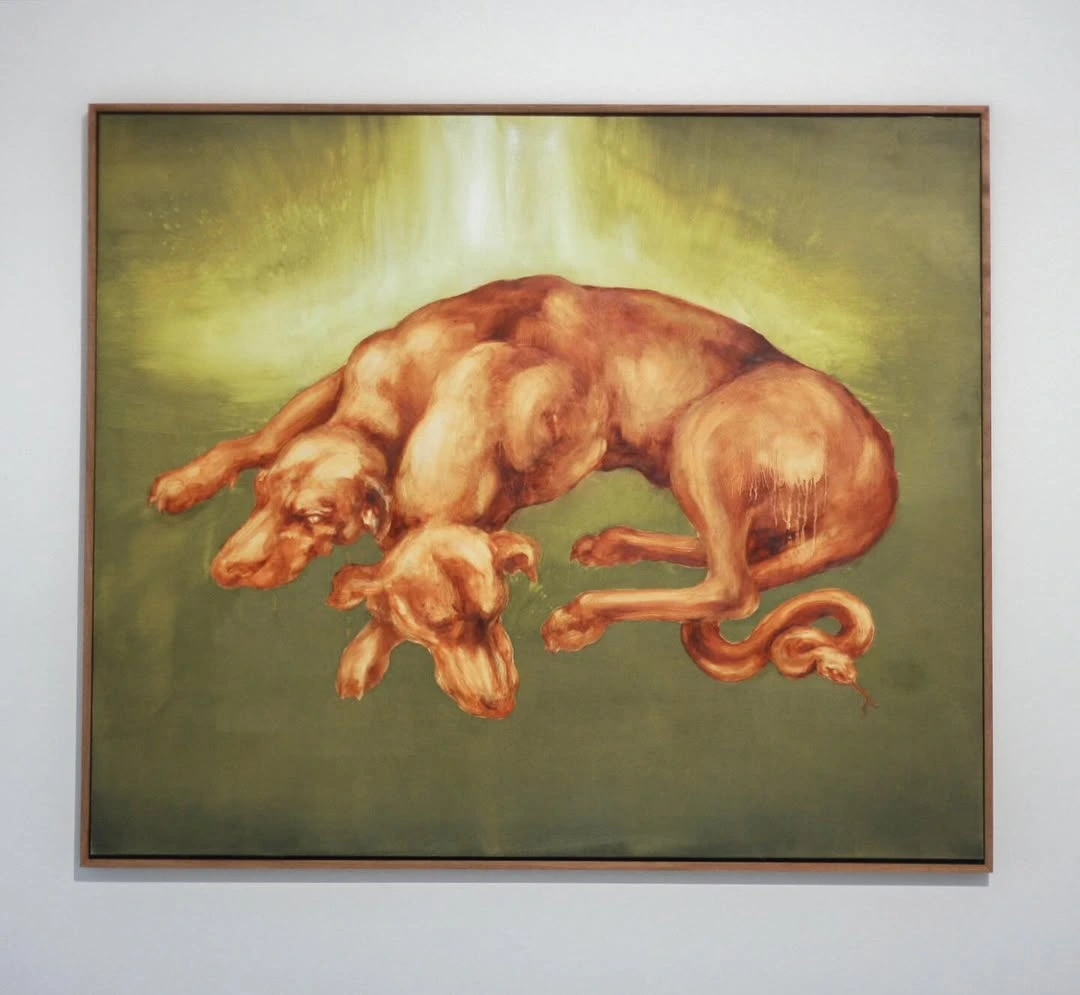
Orthrus (2024)
MR: So, I first came across your work online, and then more recently saw it in the Cloud Dancer show. There’s a real intimacy in the way you express things — especially in how forms seem to relate to one another. When you’re making, where do you find yourself gravitating towards?
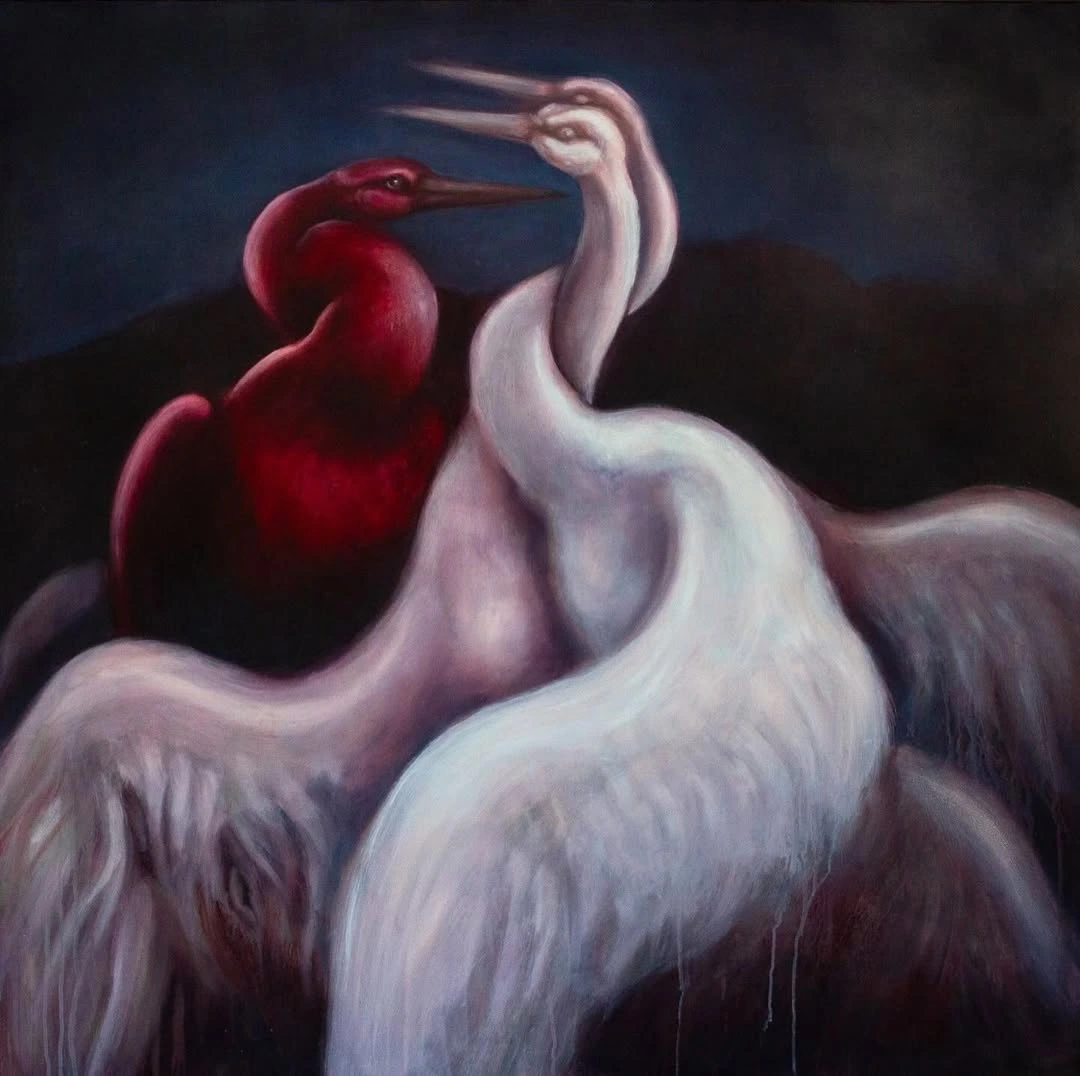
It’s funny — this year in particular, I’ve noticed a recurring pattern in my work. I keep coming back to pairs of figures. I did a painting of two doves engaged in allopreening, which is when birds groom each other’s feathers. It’s a kind of care or maintenance, but also something quite intimate.
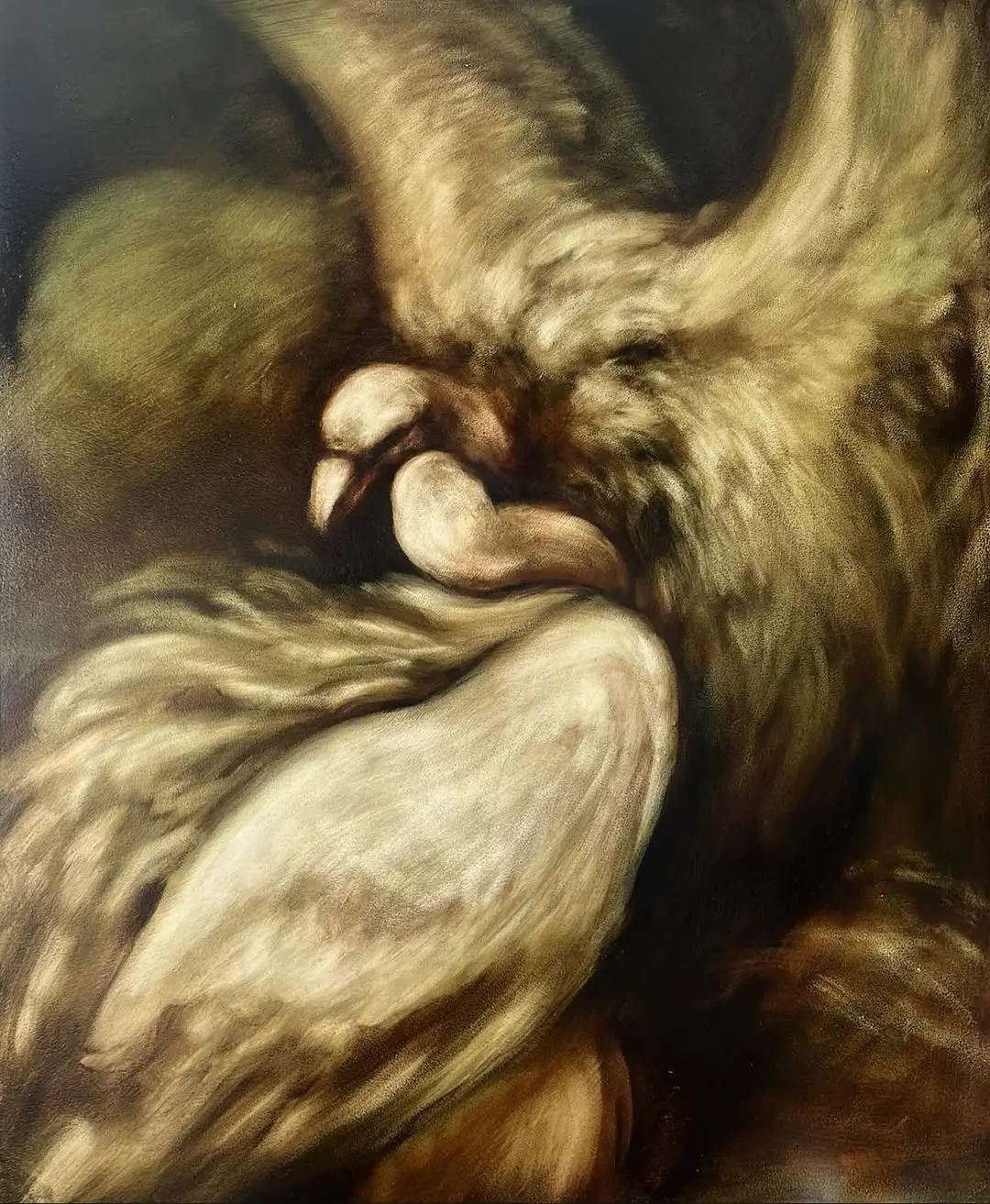
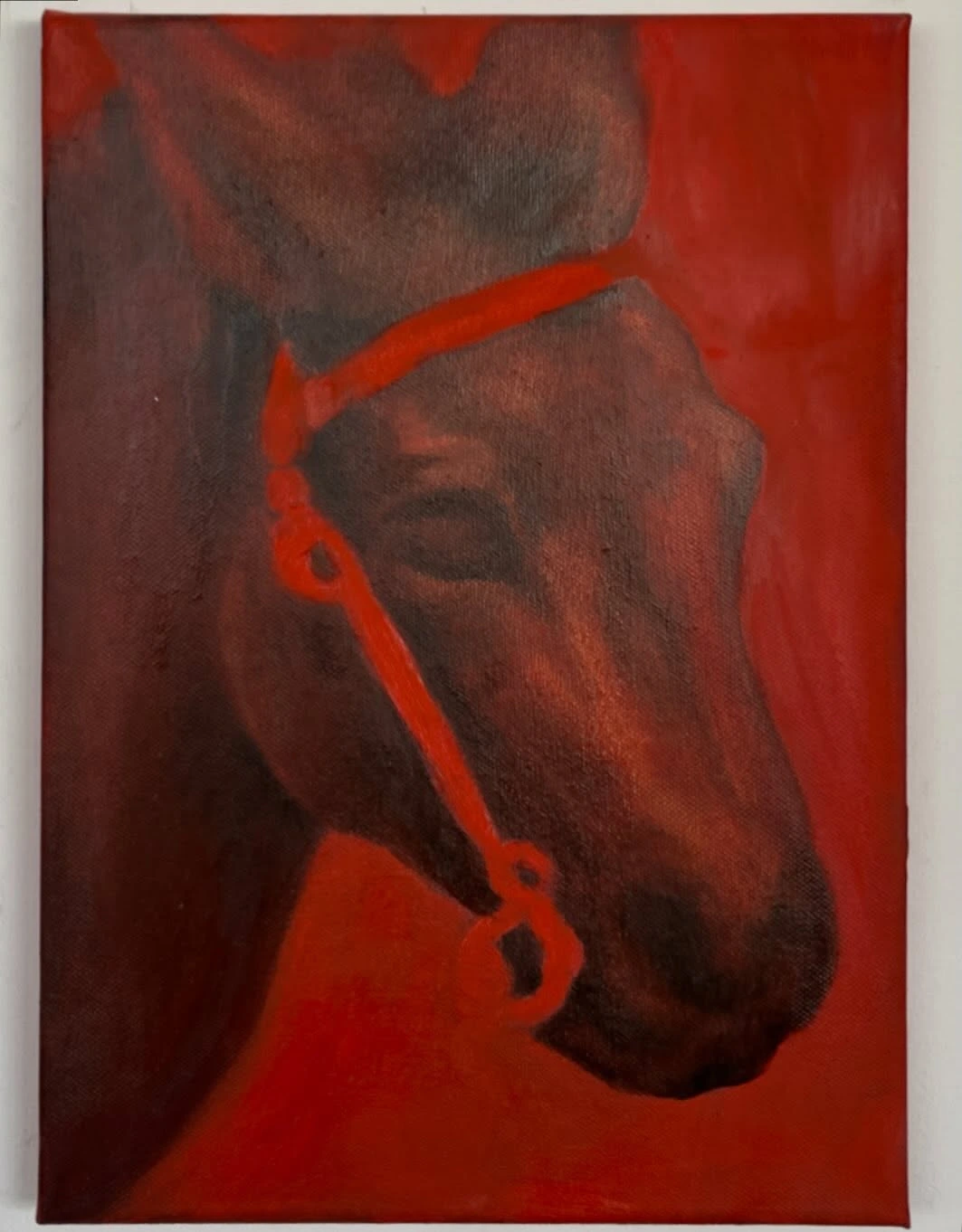
Even in my works that are a bit darker, like the bull paintings, there’s still this underlying sense of intimacy between two figures. I only really noticed it after the fact, but it probably relates to the fact that I got married in December. That said, I’m also [polyamorous], so it’s interesting that the imagery keeps resolving into pairs specifically.
I think part of it also comes from having gone through a very conceptual art education, where there’s a tendency to overthink or self-censor. I can often talk myself out of making something before I’ve even tried it. Lately, I’ve been trying to move away from that — to trust instinct a bit more and let things emerge without over-interrogating them.
But broadly, I do find myself consistently drawn to relationships — between figures, between bodies, between forms. That sense of connection, or tension, is usually where the work begins.
“Lately, I’ve been trying to move away from that — to trust instinct a bit more and let things emerge without over-interrogating them.”
MR: Your practice moves across drawing, painting, and sculpture. Does each medium reveal a different ethical relationship to the subject you depict?
I think, for me, they actually feel quite similar. I tend to approach them in the same way, and sometimes I’ll make a painting and realise it could have been a sculpture, or that it came from something I couldn’t physically make, so I translated it into painting instead.
Recently, I’ve been trying to differentiate them a bit more, but in terms of the ethical relationship to the subject, it still feels consistent across mediums. It’s more about what each medium allows me to do. With painting, I might try to capture movement or something less tangible — something that would be difficult to achieve materially in sculpture.
Drawing is usually where everything begins, so it feels like the most direct or immediate part of the process. In that sense, all three mediums are connected — they’re just different extensions of the same way of thinking.
If anything, the differences are more practical than ethical. Sculpture has certain constraints — you have to think about structure, material limits, drying time — whereas painting can be more open-ended, sometimes to the point of excess.
But overall, I don’t think of them as fundamentally separate in terms of how I relate to the subject. They’re all part of the same process.
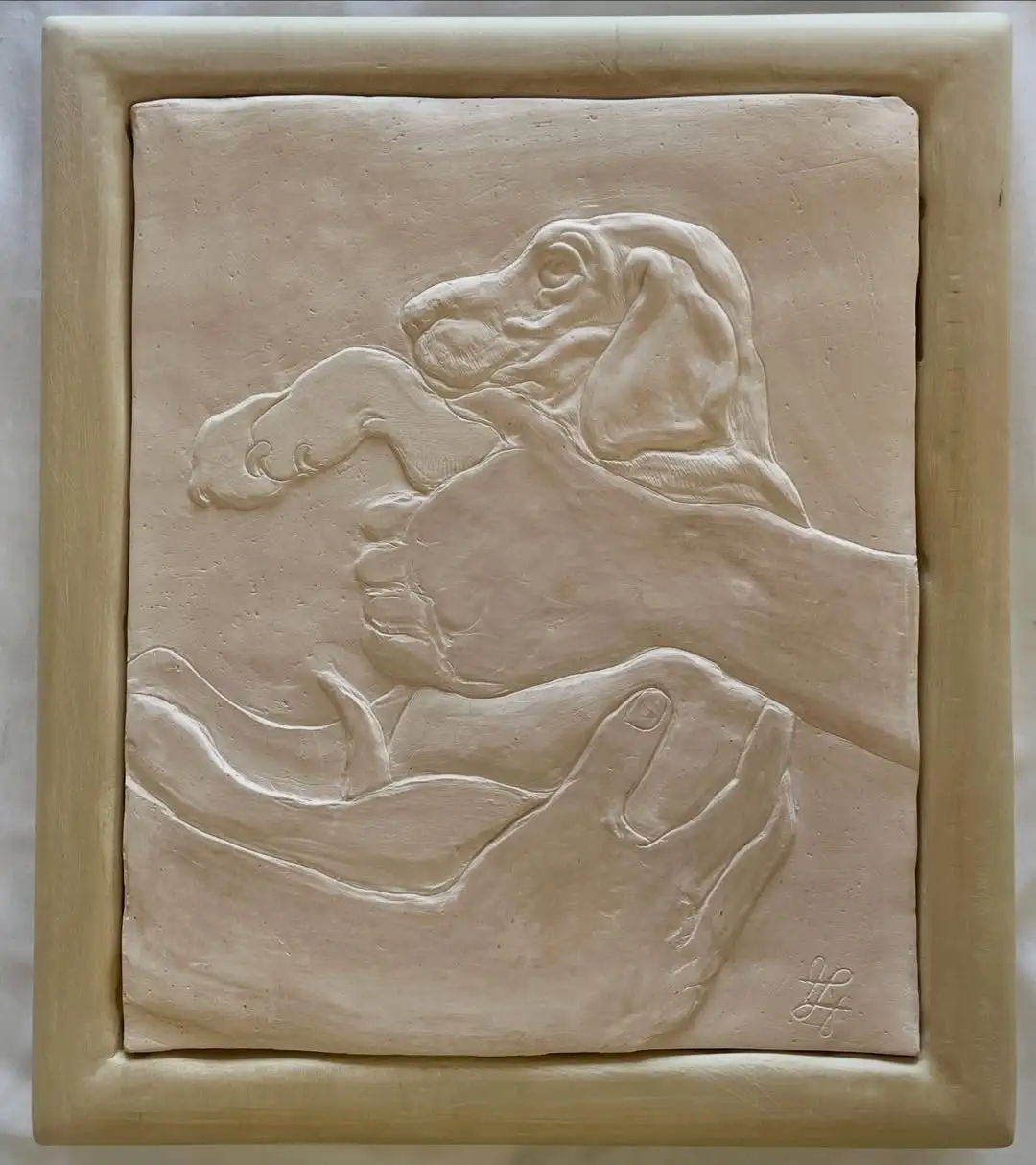
In terms of process more broadly, drawing is definitely the starting point. I collect a lot of imagery — often very casually, like screenshots or things I come across — and then sit with them for a while. Over time, something starts to form, and I figure out what I can do with it. That movement from image to drawing, and then sometimes into three dimensions, is probably the closest thing to a through-line in the work.
NZ: What kind of artwork by others do you feel inclined towards?
I think my taste is quite broad, but I often find myself drawn to work that feels different from what I make. I’ve been particularly interested in more minimal or economical practices, things that might even appear simple, or almost meaningless at first.
I was recently looking at work by Coline Strydom, and I was struck by how much can be conveyed with so little. Just a few lines, or very minimal gestures, can hold a surprising amount of weight.
In contrast, I tend to overwork things in my own practice, so I think that attraction is partly aspirational. I’m trying to move towards being more restrained — learning how to say more with less, rather than continuously adding.
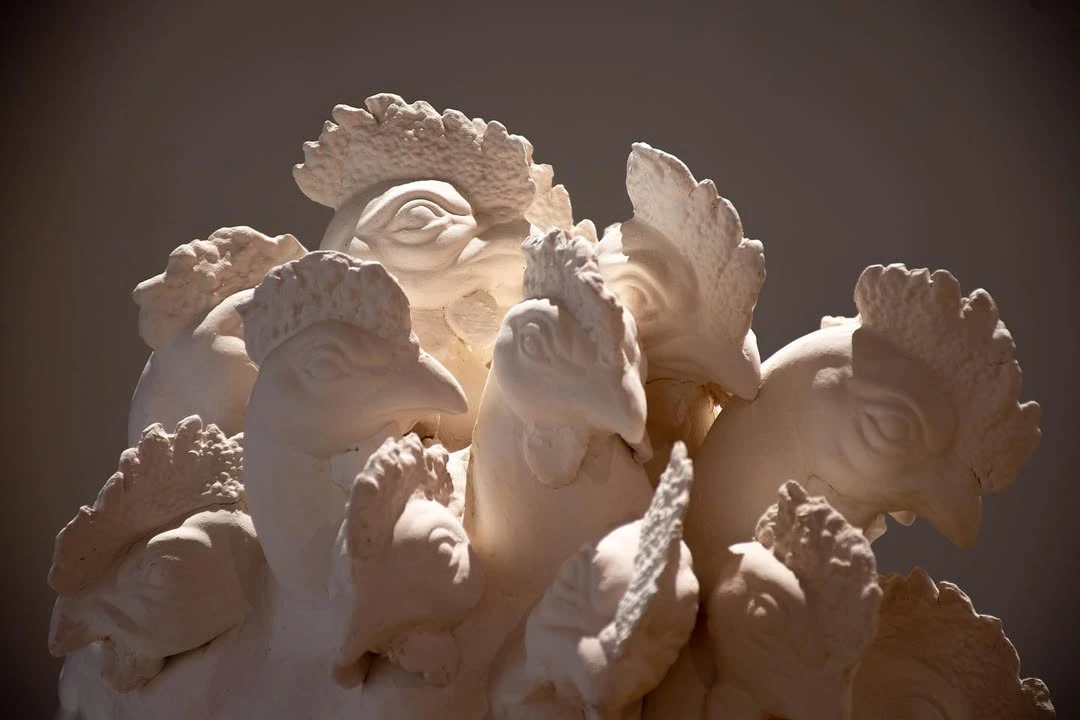
Hen-Hydras (2022)
NZ: Is that more of a self-critique or just an observation?
Probably both. I think I am aware that I tend to overwork things, so there’s definitely a self-critical element there. But at the same time, it’s also just an observation of what I’m naturally drawn to.
If you look at how I interact with Instagram, for example, I respond to a lot of different kinds of work. My taste is quite broad, so it’s actually a difficult question to answer in a precise way.
There are certain artists I come back to because their way of thinking or their use of material feels very different from mine, and that contrast is interesting to me. And then sometimes it’s much simpler than that — I’m just drawn to things intuitively, even something like animals I come across online. It’s quite instinctive.
MR: When you depict animals — whether in painting or sculpture — they seem to sit in this space between tenderness and estrangement. They’re neither quite specimen nor character. How do you approach that threshold?
That’s a great question. I think, personally, I am very interested in animals — I can be quite nerdy about them — but when I’m making work, I’m not trying to represent them in a strict or factual way. I was supervised by Jane Alexander [Michaelis], whose work has a similar quality: figures that feel both familiar and other, where you can relate to them but they’re not entirely fixed or knowable. That has definitely influenced me.
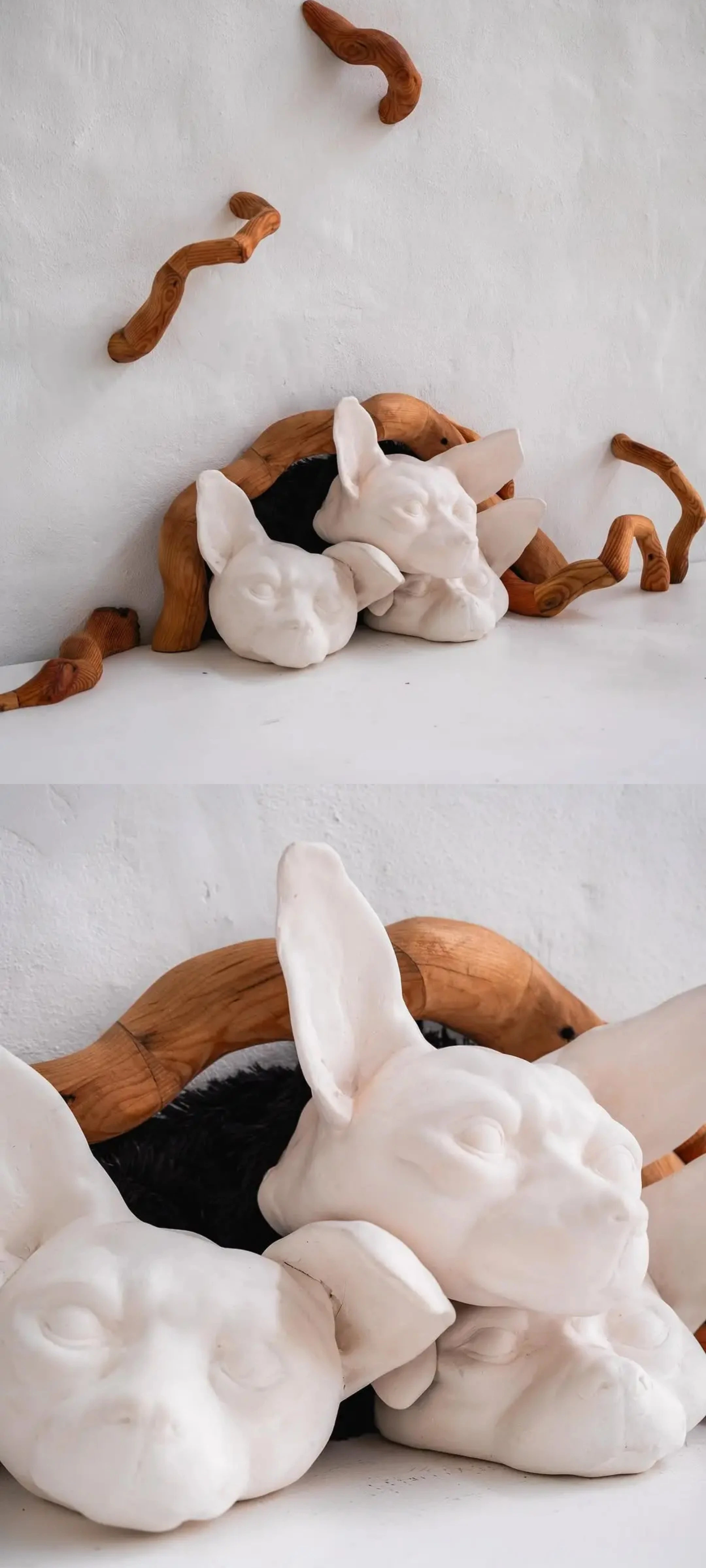
In my own work, especially in sculpture, I tend to create softer, more fleshy forms that aren’t anatomically accurate. They move away from what the animal “should” look like, and in doing that, they become something slightly more ambiguous, maybe more human, or at least more emotionally legible.
So, I’m not really deciding on a strict threshold. It’s more about allowing the form to sit in that in-between space, where it can be both recognisable and strange at the same time.
“I don’t really see works as fully finished, they’re more like a moment within an ongoing process of becoming.”
NZ: So you’ve spoken about overworking pieces, and also about reaching a point where you have to surrender them, where they’re never fully done, but you decide to let them be. At the same time, looking across your work, there’s a kind of refusal of finality. Even the way your forms exist — often backed, suspended, or partial — feels like they’re part of something ongoing rather than complete.
With that in mind, do you think of completion as an endpoint, or more as a pause within a longer process?
I think it’s much closer to a pause. I don’t really see works as fully finished, they’re more like a moment within an ongoing process of becoming. With painting especially, I tend to work in a very additive way. I build things up over time, and I’ll often take photos at different stages and later realise I preferred an earlier version. There’s always this tension between stopping and continuing. It can be a bit of a trap, but it’s also part of what I enjoy — seeing how far something can go and letting the work guide itself.
I’m also not very interested in fully resolved scenes or backgrounds. I prefer when things feel partial, like they’re still in formation. It’s less about presenting a complete image and more about holding onto a certain state or idea as it’s still unfolding.
Sculpture feels slightly different because there are more constraints. There are points where you have to stop, when something needs to dry, or when pushing it further would cause it to collapse. That forces a kind of surrender. But even then, things can break, be repaired, patched together. That process becomes part of the work too.
So overall, making feels like an ongoing dialogue, with the material, with the work, with yourself. Completion isn’t really an endpoint, it’s just the moment where you decide to pause and let the work exist as it is.
MR: So, returning to something you mentioned earlier — you’ve been painting figures in pairs, and it feels like your partner, Miro, is present in the work, even if not directly depicted. Could you tell us a bit about your relationship, your recent marriage, and how that feeds into your process?
We met about eight or nine years ago, and since then we’ve shared a studio, so there’s always been this ongoing exchange between us. We naturally influence each other’s work, whether through conversation, feedback, or just being in the same space.
More recently, we actually collaborated on a few pieces for a show, which was quite new for us. We had experimented together before, but this was the first time we were properly making work side by side. It was really special, but also quite intense — especially when there are external expectations or deadlines involved. I think we realised that working together in that way can be stressful, so it’s not something we feel we need to do all the time.
What feels more important is the support structure we have. We can be quite critical of each other, in a constructive way, and that honesty is really valuable. A lot of friends are understandably more gentle with critique, but we’ve reached a point where we trust each other enough to be direct.
So even when we’re not collaborating, the relationship is still embedded in the work — through that constant dialogue, through proximity, and through the way we challenge each other.