in conversation with
Mhlonishwa Zulu
Mhlonishwa Zulu (b. 2002, South Africa) is a painter whose practice is deeply rooted in storytelling. Drawing from personal memories, lived experiences and the narratives shared within his family, his work explores the way stories shape how we understand ourselves and the world around us.
His paintings often bring together familiar and dreamlike spaces, creating scenes that feel suspended between reality and imagination. Through surreal juxtapositions and symbolic imagery, Zulu explores the intersection of fantasy, religion and everyday life.
Through layered language, Zulu’s practice invites viewers to reflect on belief, interpretation and the strange, in-between spaces that exist within ordinary experience.
We sat with Zulu in his studio to speak about the idea shaping his work and the stories that continue to inform his practice: symbolism, imagination and role of narrative within contemporary painting.

NZ: You told me once that you just emailed a portfolio of your work to galleries, I believe after finishing art school — what made you take that approach? I find many artists are generally tentative to just “sell” themselves in this way.
If I’m being honest, it wasn’t even really my own thinking. I wasn’t like, “okay, I’m going to go out and do this.” I’m not that forward as a person.
What I’m really grateful for is that a lot of things in my life kind of led up to that moment and built into something bigger. When I was still studying, in fourth year we had a studio practice module where our lecturer set up a programme bringing in guest artists, curators, gallerists, writers — people who would come in, look at our work, and speak to us one-on-one. Because our class was small, we actually had time to have proper conversations with them.
One of the people who came in was Emma Van Der Merwe [at Everard Read], and we spoke about my work. I asked a lot of questions, trying to understand more and more. Afterwards, she emailed me and suggested I submit my work to a couple of galleries.
At the time, I was still figuring out my body of work, so I didn’t follow through fully. But I did reach out — I actually sent a DM to a gallery director I found. I just introduced myself, said I had recently graduated, shared my work, and said if there was any interest, I’d be open to a conversation — as in, if something resonates, we can talk. And they replied. They said the work was interesting and connected me with another director. They came to see the work — at that point I didn’t even have a proper studio yet, it was still on campus. And even then, nothing immediate happened. It was more like, “this is interesting, there’s something here.” We just kept in touch. Over time I developed the work more, got a studio, kept building. And then eventually they reached out and said they had an open slot and asked if I’d consider doing a small solo show.
I thought, “let me try, let me see what happens.” And then one thing led to another.
NZ: You’re one of the few artists that I’ve seen that don’t overtly portray what it is to be Black in South Africa. It’s actually quite rare to see. Why?
I think it’s interesting, because it’s something I’ve also had to grapple with on a personal level. My upbringing was quite different. My parents were divorced, so I was mostly living with my mum, but I’d also go visit my dad’s side regularly, especially back at our family home, in more rural areas.
Growing up, I didn’t experience racism or oppression in a very direct way. Instead, I was in this kind of in-between position. I was often “the coconut Black kid” or “the Black friend,” where there’s a level of acceptance, but you’re also expected to conform to a certain way of being, to the norms of that environment, a lot of which became internalised. The way I spoke, how I acted, what I liked, it was shaped by those spaces. At the same time, I’d go back home and feel a different kind of distance. I couldn’t speak the language properly, I didn’t always relate to my cousins or people my age there, and there was a sense of alienation. Not imposed by them, but something I felt within myself.
I was navigating both worlds, but not fully belonging to either. Because of that, I think I naturally leaned towards what I was exposed to more in the city: European aesthetics, American influences. In art, I was looking at artists like Salvador Dali. That shaped how I saw painting and what I was interested in.
Now, I think I’m at a point where I’m starting to reconcile those things. There is a connection to my Blackness that I’m beginning to understand differently — not necessarily through direct figuration or obvious representation, but through experience, memory, and space. When I go back home now, it feels like a sanctuary. There’s a sense of love, familiarity, and shared experience — even if it’s not identical. There’s a unity in being able to laugh about similar things, to exist in that space together. I think my work is still figuring that out. It’s just not expressed in the same overt way.
“When I’m working now, I’m thinking about [those] spaces, not just physically, but how they’re experienced, how they’re remembered, how they’re narrated. There’s a kind of storytelling happening, even if there aren’t always figures present. And I think that’s where a kind of reclamation comes in for me, not in a direct or political sense, but in creating something that moves beyond just the harsher realities. There’s still an awareness of those realities: of struggle, of limitation but there’s also imagination, play, and expansion beyond that.”
NZ: In work that involves figuration, here’s often a focus on reclamation of narrative, racial contrast, social and political power dynamics. How do you situate yourself in relation to that?
I think that’s something I’ve thought about a lot, because I see it and I respect it. There’s a lot of work that deals with reclamation, with critique, with rewriting narratives around Blackness, and I think there’s real beauty and importance in that. But for myself, I never really saw myself making work in that way. I didn’t feel like I could position myself as that kind of artist, because that wasn’t fully my lived experience. I wasn’t someone who came from a very direct or visible struggle in that sense, and I didn’t want to present myself as something I’m not, or try to intellectualise an experience that isn’t mine in that way.
At the same time, my work is still very much in relation to my Blackness. It’s just not always overt. It’s something I think I’m still uncovering… how that shows up, how it exists alongside other forms of Black expression. I think also there’s a tendency for artists to be categorised — where people expect a certain kind of Black figuration, a certain visual language, certain themes. And even if that doesn’t limit the artist themselves, it can create pressure from outside — from galleries, institutions, audiences — to conform to what is recognisable or what sells.
I’ve always had a distance from that. I used to do portraiture, drawing people I knew, but over time I found myself more drawn to space. I feel like space is where I’m finding a kind of rootedness in my expression of Blackness. Not necessarily through direct representation, but through land, scenery, atmosphere. Not in a way that’s literal — like painting a landscape and saying “this is South Africa” — but something more internal.
A lot of that comes from being back home, from those environments, from stories my uncles and family would tell — stories about land, about places, sometimes very real, sometimes almost fantastical. As a kid, that shaped how I imagined things.
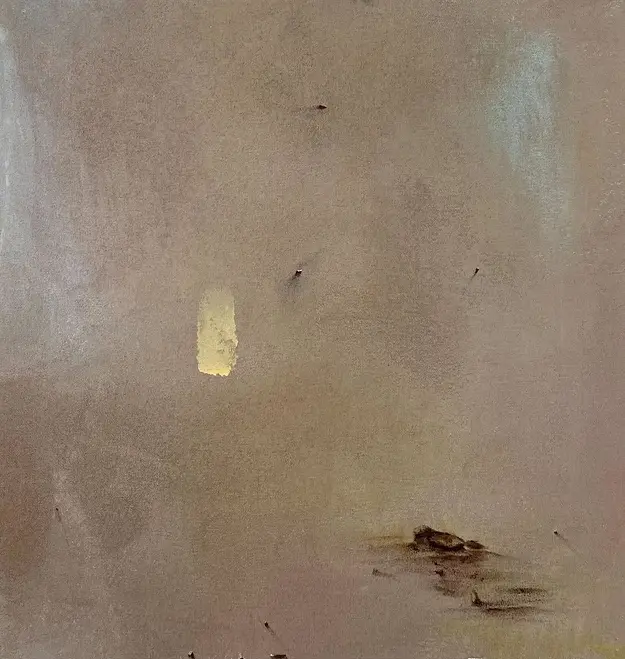
When I’m working now, I’m thinking about those spaces, not just physically, but how they’re experienced, how they’re remembered, how they’re narrated. There’s a kind of storytelling happening, even if there aren’t always figures present. And I think that’s where a kind of reclamation comes in for me, not in a direct or political sense, but in creating something that moves beyond just the harsher realities. There’s still an awareness of those realities: of struggle, of limitation but there’s also imagination, play, and expansion beyond that.
So, I’m trying to reconcile those things, my influences from European painting, the formal qualities I’m drawn to, and my own experiences of place, memory, and Blackness.
I’m not trying to make a statement or present something new in a declarative way. It’s more about trying to understand and express something honestly, in a way that feels true to how I see and experience the world.
“I think also there’s a tendency for artists to be categorised — where people expect a certain kind of Black figuration, a certain visual language, certain themes. And even if that doesn’t limit the artist themselves, it can create pressure from outside — from galleries, institutions, audiences — to conform to what is recognisable or what sells.”
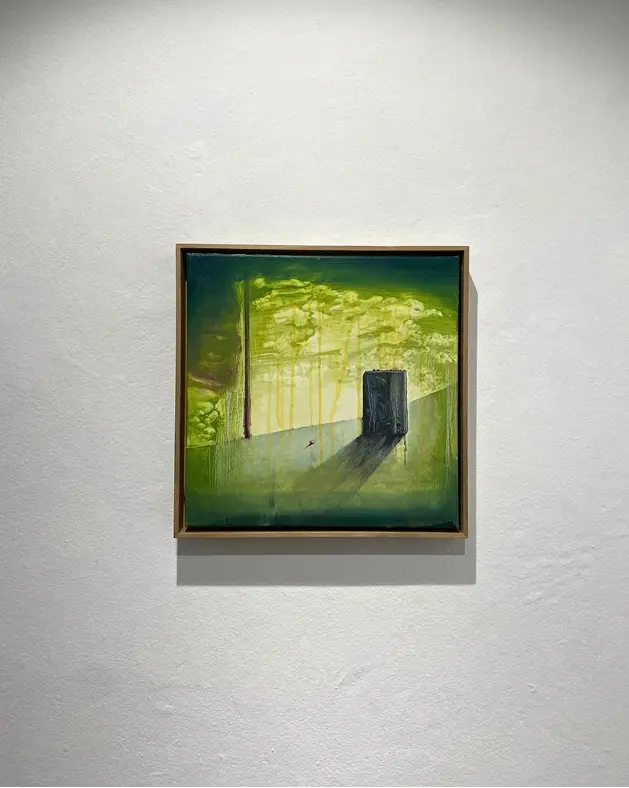
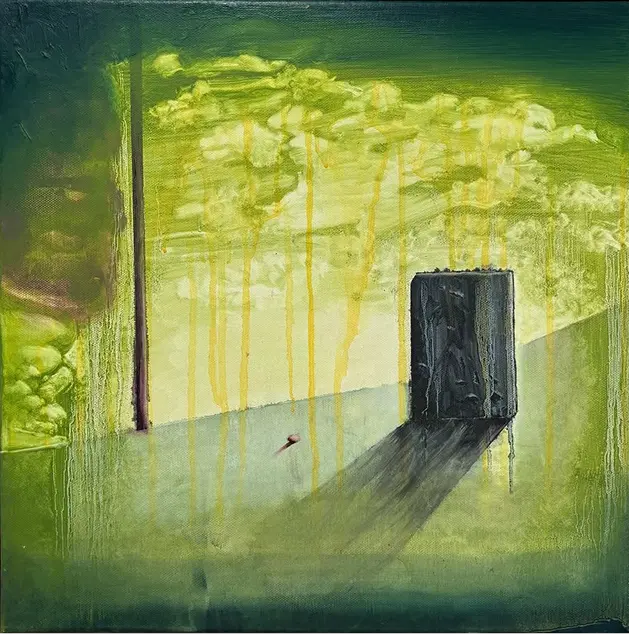
MR: And you were speaking about, of course, the stories your uncles would tell you in the landscapes and things like that. Would you say that’s where your interest in surrealism comes from, or was it something else?
It did inform it, yeah. I was always imagining things as a kid, and I think that imagination was either coming from, or propelled by, those stories. They were very fantastical, very dream-like. I don’t know why, but they stayed with me. I’d hear them before bed or during the day, and then I’d just keep thinking about them, daydreaming, going beyond what was physically there.
Even now, I don’t necessarily use dreams directly as references, but I do think they influence how I understand space. Like in a dream, you can be in one place, turn, and suddenly you’re somewhere else, but it still feels coherent. The blending of spaces, that fluidity of perspective, that definitely shows up in my work, in how I construct depth and environments. I think those early stories, combined with everything else I was exposed to, all come together in that way of working.
That sense of imagining other planes of existence, or expanding what I was seeing, started quite early. When I later came across surrealism, it felt like something clicked. I was like, “this makes sense, this is how I’ve been thinking”. I just didn’t have the language for it before. It felt like it gave me permission to think differently, to break away from those fixed ways of seeing.
I always joke that I’m an “urbanised farm boy,” because I was influenced by both sides. I was consuming Western media, TV, all of that, but I was also hearing these stories from my uncles, being in those rural spaces. Even if it wasn’t always conscious, those things were shaping how I think and imagine.Socially as well, I grew up in environments that were quite structured, certain ways of thinking, certain expectations. I went to schools where I was often the only Black kid in the grade, so you’re adapting to a specific culture all the time.
MR: So looking more at the work — there’s this sense that your paintings exist mid-sentence, between states, between dream and reality, like something has just happened or is about to happen. When you start a painting, what comes first — a feeling, a question, an image?
I think it’s all of that at once. I realised that a lot of artists might have different processes, but usually there’s a central theme they’re working through, whether it’s history, identity, family, politics. For me, it’s not that fixed.
As a kid, I used to get lost just exploring, and I think my mind works the same way now. I move from one thought to another, leaving little markers I can return to, but there’s no strict structure to it. I’ll find myself looking at something like the sun, but thinking beyond it, where the light is going, what’s outside of what I can see. My work can start from anything, a lyric, a piece of music, a conversation. I listen to a lot of instrumental music, and sometimes I’ll hear something and an image just appears. I don’t know exactly where it comes from. It’s made up of everything I’ve experienced or been exposed to.
A big part of my process is also just walking. I’ll walk through the city, look at buildings, angles, how shapes interact. Even something like a lightpost against a building becomes interesting when you look at how those forms engage each other. There’s a kind of architectural way of seeing, thinking about perspective, structure, and how that can be broken or shifted.
I also write things down, phrases people say, things I hear, and sometimes those become titles. The title and the painting don’t always have a direct relationship, but there’s something connecting them. That’s why I can’t always explain a work in a linear way, like “I did this because of this.” The process is more reflexive than that.
I usually start with sketches, but they’re not fixed plans, they’re more like starting points. I used to be very precious about making things perfect, especially when I was younger. But now I allow for accidents. I let the painting kind of speak back and then I respond to that.
The same object or colour can mean completely different things to different people, based on their experiences.
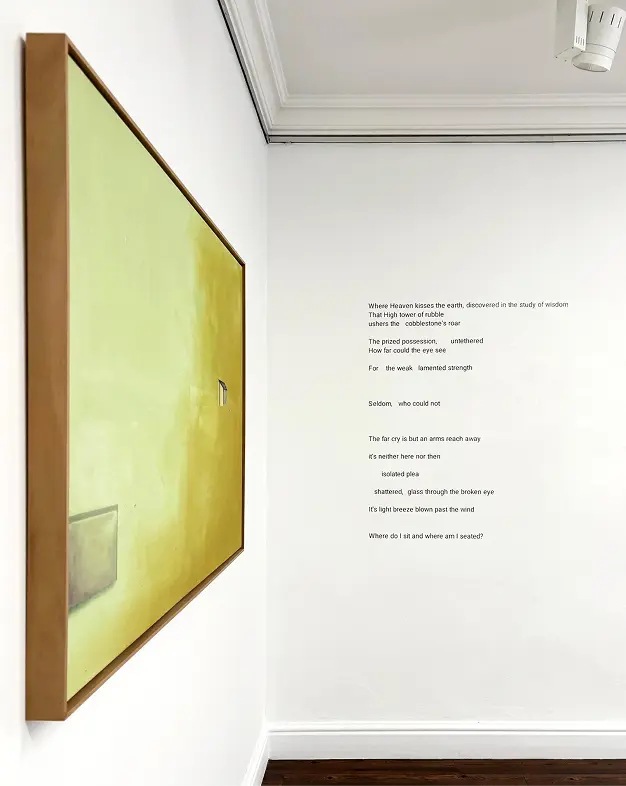
That’s something I’m really interested in, how we each bring our own understanding into the work. At its core, I think of the work as a series of exchanges between people, places, memory, time, the known and the unknown. I’m not really interested in getting from A to B. I’m more interested in what happens in between, in those smaller, nuanced spaces.
That’s where the “mid-sentence” idea comes in. It’s like I start something, and the viewer completes it. We’re both contributing to the meaning. It becomes a kind of collaboration through looking and thinking. Even when the painting is finished, that process doesn’t stop. New layers of meaning can keep forming, through conversation, through critique, through different ways of seeing. And I think that ongoing exchange, that continuous unfolding, is what I’m really interested in.
MR: From a process point of view, how do you know when a work is finished? When is it ready for people to see?
I’m getting better at knowing that, but I’m not fully there yet. Earlier on, especially when I was doing more realistic work, it was easier, you could compare it to a reference and see if it was “right.” With the way I work now, there’s so much more freedom, which also makes it harder. There’s always the possibility to keep pushing, to keep adding, to justify something that maybe isn’t working. A lot of it comes down to feeling.
That’s also why I like having people in the studio, like Jared [Leite] for example. Even while the work is still in progress, I’ll ask them what they see. Their responses can shift how I look at the painting, maybe I notice something I hadn’t before, or lean further into an idea.
There’s always this back and forth of thinking it’s done and then not being sure. Sometimes I’ll leave something, come back the next day, and then decide. Other times I’ll even ask a friend for just a simple “yes” or “no”, and I usually already know which answer I’m hoping for.
It’s one of the difficult things about painting: you never see the work the same way a viewer does. Like a mechanic looking at a car, you see all the parts, not just the final thing. And I think now, especially with the newer work, there’s a shift. Before, my work was more dense, more obviously “about something.” Now it’s more open, more minimal, more intentional. There’s less there, so what is there has to work harder.
I’m less interested in making something that explains itself, and more interested in making something that feels compelling, something that stays with you, that makes you think later, or feel something you can’t quite explain. That’s what I look for in my work. If it can do that, if it can hold someone, even in uncertainty, then I feel like it’s ready.
NZ: It’s interesting what you’re saying about not needing to answer the “why,” and letting the work exist on its own. Is there a spiritual element to that? Are you religious, and how does that inform your work?
I think I’ve become more intentional about my faith over the last three years or so. I grew up Christian, going to church, learning everything, but it was more surface level. There wasn’t really a personal connection, it was just something you did because of how you were raised. A lot of what I thought was “faith” was actually just morals, being a good person, being kind, and so forth. Then later, especially towards the end of high school and into university, I kind of moved away from it and just lived how I wanted. But I reached a point where that way of living just didn’t hold up. There wasn’t a sense of peace, and things started to fall apart in ways I couldn’t really ignore.
That’s when I had a more real encounter with God, not in a perfect or ideal situation, but actually in a place of confusion and difficulty. And from there, it became something I had to experience for myself, rather than just understand intellectually.
In terms of the work, I don’t want to be overly direct about it. I’m not trying to paint something literal, like putting a cross in the middle of a painting and calling it a day. That doesn’t really engage people in a meaningful way, especially if they don’t already believe. There might be elements that connect to scripture or belief, but they’re not always obvious. It’s more about creating something that engages and plants a seed.
“I’m less interested in making something that explains itself, and more interested in making something that feels compelling, something that stays with you, that makes you think later, or feel something you can’t quite explain. That’s what I look for in my work. If it can do that, if it can hold someone, even in uncertainty, then I feel like it’s ready.”
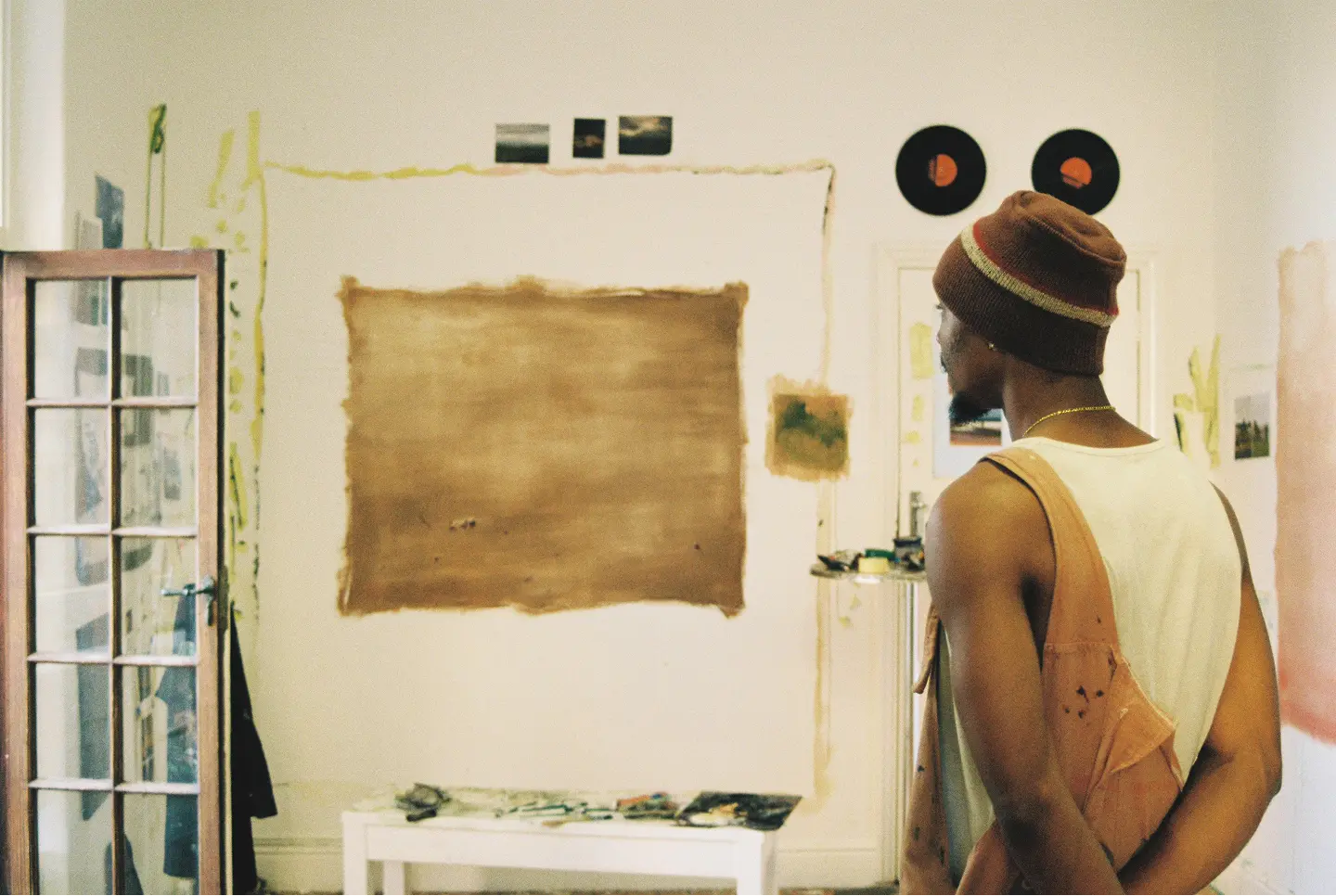
Mhlonishwa in his studio, during the making of his work titled 'The Natural Cause' (2026)
MR: So thinking about that in relation to your process, would you say God is a mirror, a window, or a threshold?
That’s a good question. It can be all of those things, just in different capacities.
It can be a window, something I see through. Like a lens or a filter. The way I understand things, the way I look at myself and the world, is shaped by that. Through that lens, I can see myself more clearly, but also, at the same time, I can see love and grace in spite of that. And that’s something that’s quite hard to make sense of sometimes.
Then it’s also a threshold. There’s a sense of movement and growth in it, questioning, learning, unlearning. There are moments of doubt, frustration, even anger. Asking things like, why is this happening, why is there suffering, why do things have to be this way. So it’s not a static thing, it’s something you’re constantly moving through.
And I think that idea of threshold is important, because it’s tied to change. It’s tied to going through something, not around it. The reality is that life doesn’t necessarily get easier. In some ways it can get harder. But there’s something internal that shifts, something that helps you move through those things differently.
I also think it changes how I see people. There’s no hierarchy in that sense, no one is above anyone else. And that’s something I think about in relation to the work as well. Different works might feel different to me, but they still hold value in their own way.
NZ: Surrender, acceptance?
Yeah. We put a lot of pressure on ourselves to be more than we are, to hold everything together, to be in control. And then when things fall apart, we look for something or someone else to blame, instead of sitting with it and asking where we might be part of the problem.
Surrendering doesn’t mean everything suddenly becomes easy, it just means you’re not carrying everything on your own anymore. There’s a different way of moving through things.
I’ve been reading a book on faith recently, and it speaks about God as a creator, and what it means to create in response to that, to build into something larger, even if you don’t fully understand it. It’s not about knowing the destination exactly, but trusting that there is one, and continuing to move toward it. So it’s less about having everything figured out, and more about how you walk that path, how you live, how you act, how you create.
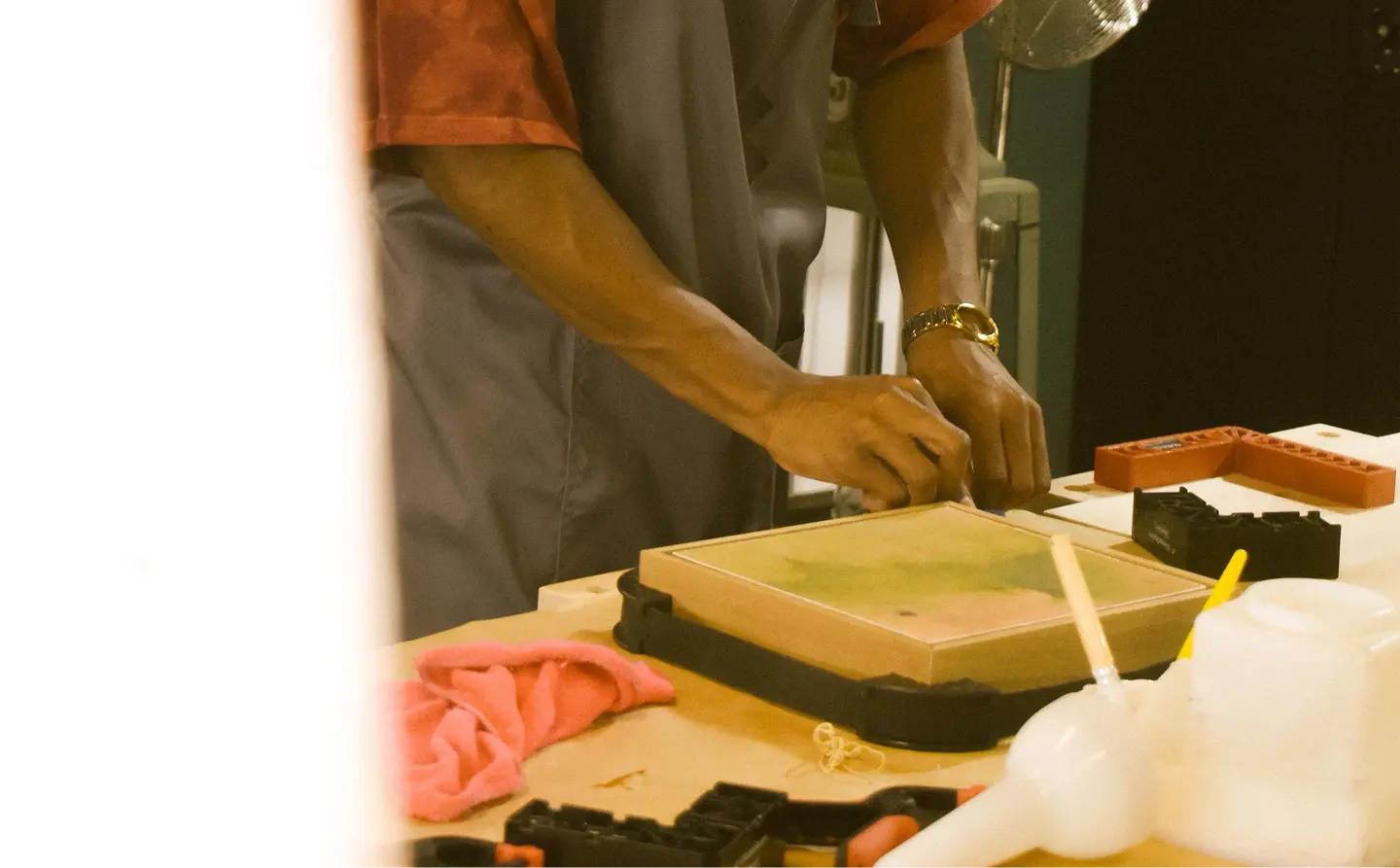
In preparation for the 2026 Investec Cape Town Art Fair. Zulu's works were showcased with Bode Gallery.
Megan to Mhlonishwa: If your work could ask the viewer one question, what would it be?
Mhlonishwa to the world: "Where do you want to go?"