in conversation with
Nathalie Viruly
Nathalie Viruly's (b. 1995, South Africa) practice spans across curating, writing and publishing, shaped by an interest in how knowledge is produced, circulated and consumed. Working between institutional and independent contexts, Viruly approaches exhibitions, texts and public programmes as sites for collective meaning-making, collaboration and conversation.
Drawing on both South African and international contexts, Viruly’s work is attentive to the social lives of cultural production. Her curatorial practice is often the foreground for alternative forms of exchange. Through exploring how dialogue, gathering and publishing can function as methodologies in their own right, she creates spaces where multiple narratives can coexist and where contexts remain open to revision and reinterpretation.
Oscillating between curator, writer and organiser, Viruly’s practice is guided by a commitment to public engagement and experimentation; whether working with artists, collaborative structures or publications, her interest is located within the conditions that shape cultural production and the possibilities that emerge as a result of art becoming a framework for collective inquiry.
We met with Nathalie at her home in April to converse about her curatorial practice, her ongoing interest in books as exhibitions, and the curatorial sensibility shared between geographies.

NZ: Your curatorial work often unfolds across non-traditional or provisional spaces. What does a “successful” exhibition look like to you?
I’m glad that you used the term ‘curatorial’ because I actually find the word ‘curating’ a bit of a dirty word. I don’t really want to be seen as a curator in that way.
I don’t think I’ve ever really been interested in assembling artworks in a room just to tell a story about surrealism or some specific theme. I’ve always been more interested in the conversations that come out of exhibitions and the people that come together around them.
When I started working with Gallery to Move On, I used to get frustrated with my collaborators, Paul and Mike, because they were so focused on making it a place to hang out with friends. I thought there had to be more to it. But actually, they were right. They were trying to create a place where people could collaborate and converse — to make the art world feel like a living thing. We worked and played with great artists every time.
That eventually became what success meant to me. Not just having every cool person arrive somewhere, or a review, but creating discussion around a show, creating opportunities to write about it, question the scene, question the system, take a chance. Those things became much more important than the exhibition as a polished object.
Sean O’Toole once made an Instagram caption about one of my shows, saying he was confused, and I had a complete meltdown. I thought, ‘I’m a terrible curator.’ But I realised that version of curating — the slick, authoritative exhibition-maker — wasn’t my point of view. I’m much more interested in bookstores, third spaces, and provisional environments where people can sit with objects and with each other and think together. I’m interested in what’s janky, personal, and unfinished. I like manifestos.
In South Africa, there simply aren’t many spaces that allow for that kind of experimentation. We have a very traditional art market, so when you study curatorial practice, you often end up feeding into the gallery system. There’s this dead zone between commercial galleries and museums where non-commercial work struggles to exist.
There are attempts to create those kinds of spaces, but there still aren’t enough of them. Funding structures make it difficult. There’s very little support for the people trying to create situations for culture to happen.
And if you start a project space yourself, you suddenly become everything at once — artist manager, graphic designer, producer, administrator. People assume you have infrastructure, but you are the infrastructure. I think that’s why a lot of curators eventually leave the field. It can become very lonely and unsustainable.
What still interests me, though, are spaces that don’t feel over-prescribed or overly determined. Spaces where someone can arrive and feel that whatever they have to say matters. I think that’s what a successful exhibition looks like to me now — not necessarily a perfect exhibition, but a living situation where people, ideas, and objects can genuinely encounter one another.
MR: How do you balance intuition and structure in your curatorial process?
Intuition is structural, so is luck.
Someone once told me that when you start working on a project, you should put it into Excel. I thought that made absolutely no sense for the kinds of things I was working on, but now I’m known for having these completely insane Excel documents.
I think what they meant was that once you put something into a structure, the idea stops feeling so overwhelmingly grand.
My process is research heavy. I gather as much as I can — references, texts, ideas, images. After it's all in-put, I actually put the spreadsheet aside and almost forget about it. That’s when I allow myself to play, because I know everything already exists somewhere. I don’t have the fear of forgetting something or losing a connection. It’s all sitting there. Then things kind of marinate subconsciously, and eventually I begin drawing visual or conceptual patterns between them.
I don’t really know if I’d call that instinct.
I’ve seen curators who seem to have these breakthroughs — these very performative ‘eureka’ moments where they suddenly know exactly where something belongs. I think I probably have those moments too, but I don’t perform them. For me, it feels less like inspiration arriving out of nowhere and more like accumulated dialogue.
In that way, I feel like I’m in collaboration with every author I’ve ever read and every artist I’ve encountered. A bit of a shoplifter if you will.
So, it feels strange to speak about instinct as if ideas emerge independently from other people. Everything feels collaborative to me, even when those collaborators are long gone.
Maybe that’s why I struggle with the term ‘independent curator. What does independence actually mean in this context? Even if you’re working outside of an institution, you’re still constantly surrounded by artists, writers, conversations, feedback loops, histories, and references. Curating never feels isolated to me.
Everything I know practically was artist-taught. Mike taught me graphic design and InDesign. Laura taught me how to make it all feel compelling. Paul taught me how to hang paintings. Jonothan and Zima taught me so much. All my colleagues do too. So, my process has always been relational. My political science background shaped me a lot too, it gave me a different literacy to typical curators of the art history brand. I learned how to read structures, institutions, systems, people, and power. So, when I think curatorially, I’m often thinking politically and socially as much as aesthetically.
At the same time, people take institutions and systems too seriously. We’re obsessed with presenting things as polished and fully resolved. What about experimentation, risk, and allowing projects to evolve slowly as the desire? I’ve had to let go of the idea that everything needs to resolve quickly into a finished product or that you can’t change your mind. You can. Why not? Change the title, reprint. Some projects sit in notebooks for years. Sometimes things only make sense a decade later.
I think part of balancing intuition and structure is allowing yourself to work slowly enough for ideas to reveal themselves over time, while still building enough what you need around yourself so that you can hold all the complexity without collapsing under it.
“I feel like I’m in collaboration with every author I’ve ever read and every artist I’ve encountered.”
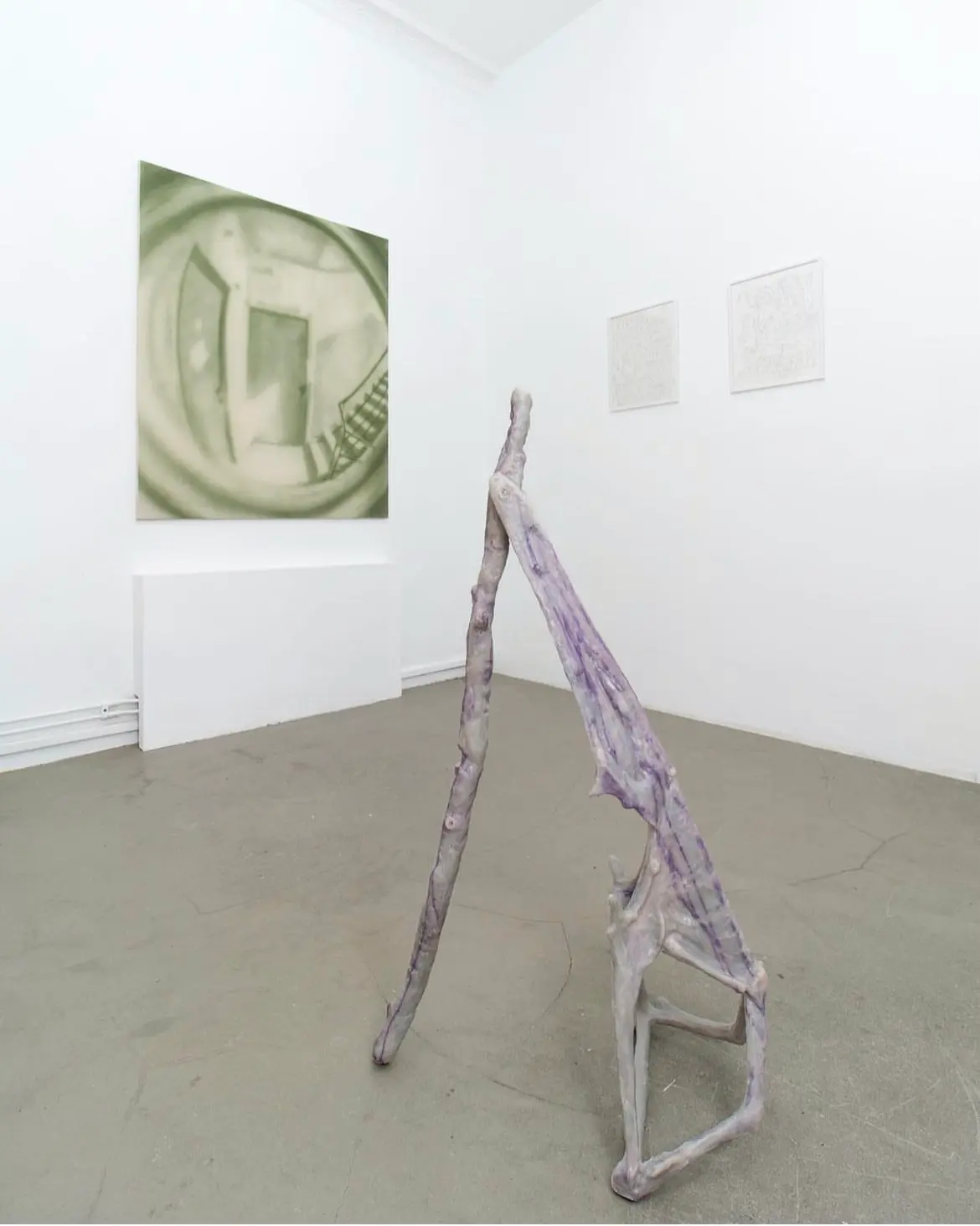
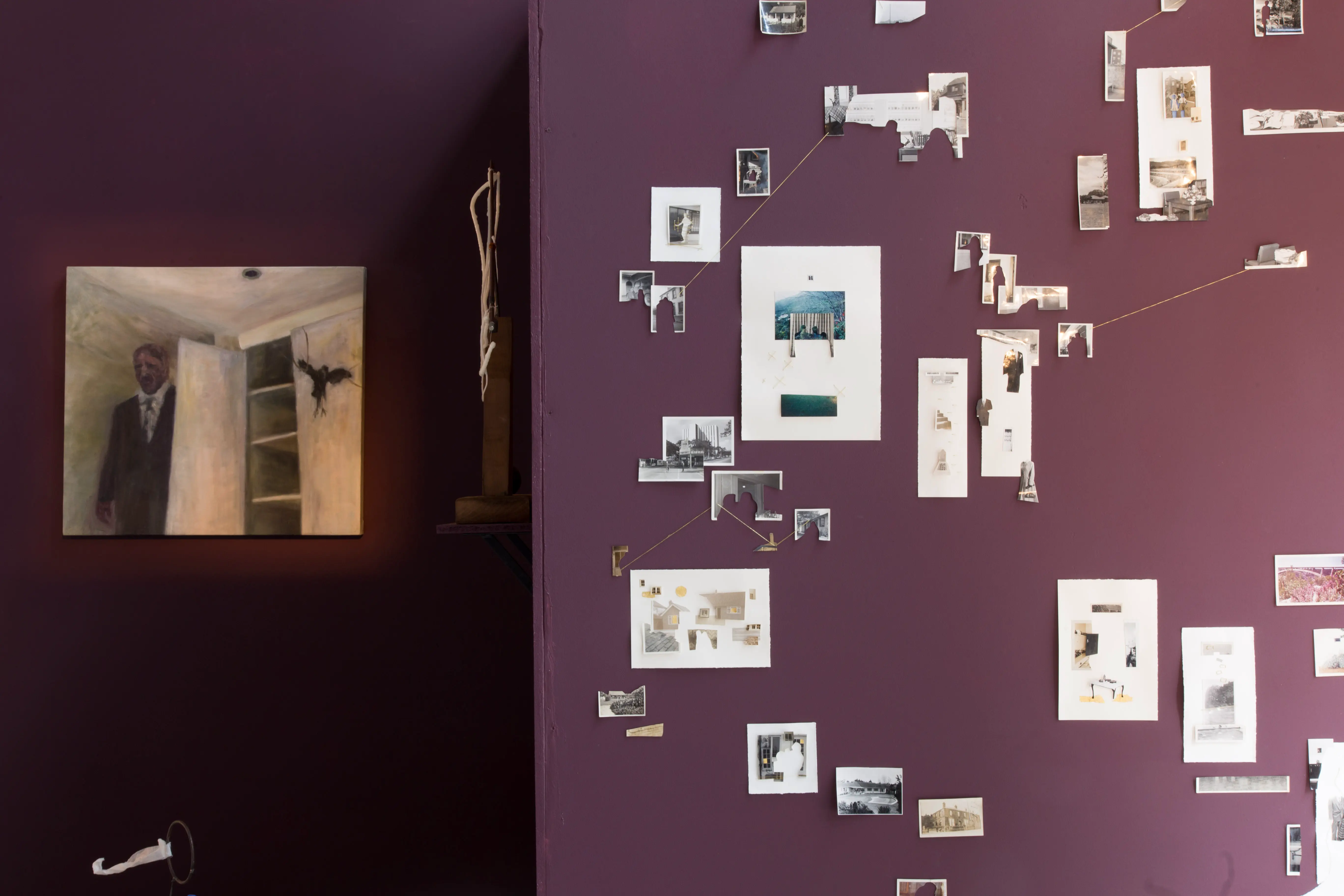
Premise installation (2021): Curated by Kerry Lee Chambers and Nathalie Viruly for the Joe Prussian Collective at 9 Lower Burg Street, Cape Town.
NZ: Your writing practice seems inseparable from your curatorial work. How do these two modes inform each other?
A lot of the writing I’ve done has been tied to exhibitions and galleries. I haven’t really written criticism or reviews in the traditional sense or publicly, apart from a few small things early on. For the most part, I’ve been writing to make exhibitions accessible or to shape language around certain ideas. I think my interest in publishing has always been tied to the public aspect of it — how information circulates, how ideas build, and how people encounter them.
Part of that interest also came from feeling like there wasn’t enough space. Publishing became another kind of space that could be made. I think I’m a bit obsessive about that. Writing, for me, is very much about translation. It’s about making ideas accessible and giving language to things that might otherwise remain abstract. There’s a figure I love, Ulises Carrión, a Mexican conceptual artist and concrete poet who used language itself as a material. Thinking about artists like that really shaped the way I approach curation or deconstruct text and its containers.
What fascinates me about publishing, even writing, is the intimacy of it. Someone might go to an exhibition and experience something publicly, but a publication enters their private space. Somebody might sit in bed at night reading it or fall asleep with it beside them. That feels very intense to me. If I make something that someone lives with privately, like that, the work suddenly exists inside someone’s personal space. There’s something very interesting to me about that kind of closeness and permeability. Writing, therefore, becomes more than explanation. It’s also image, design, rhythm, and structure.
I genuinely love the visual experience of text — even just the appearance of a full page of writing. I think that’s why I’ve kept producing texts. They satisfy all of those kicks simultaneously.
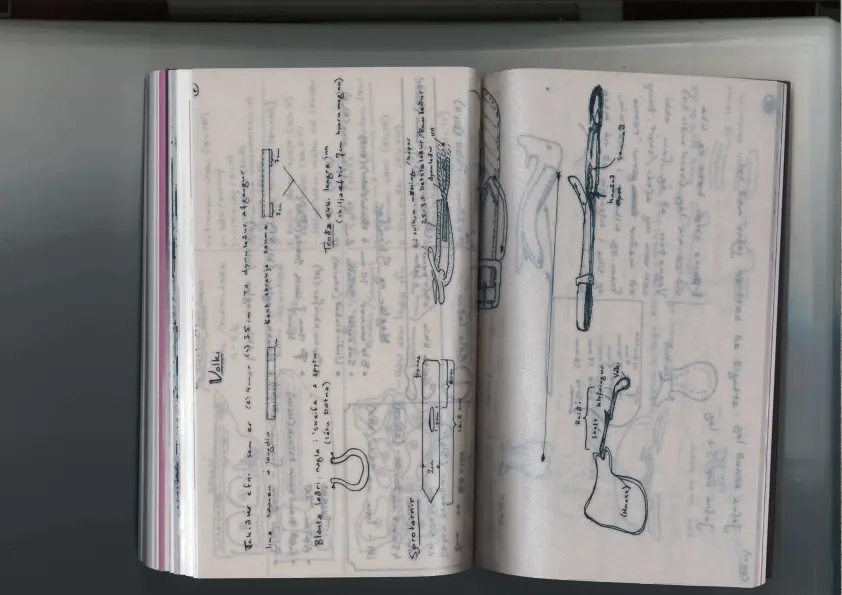
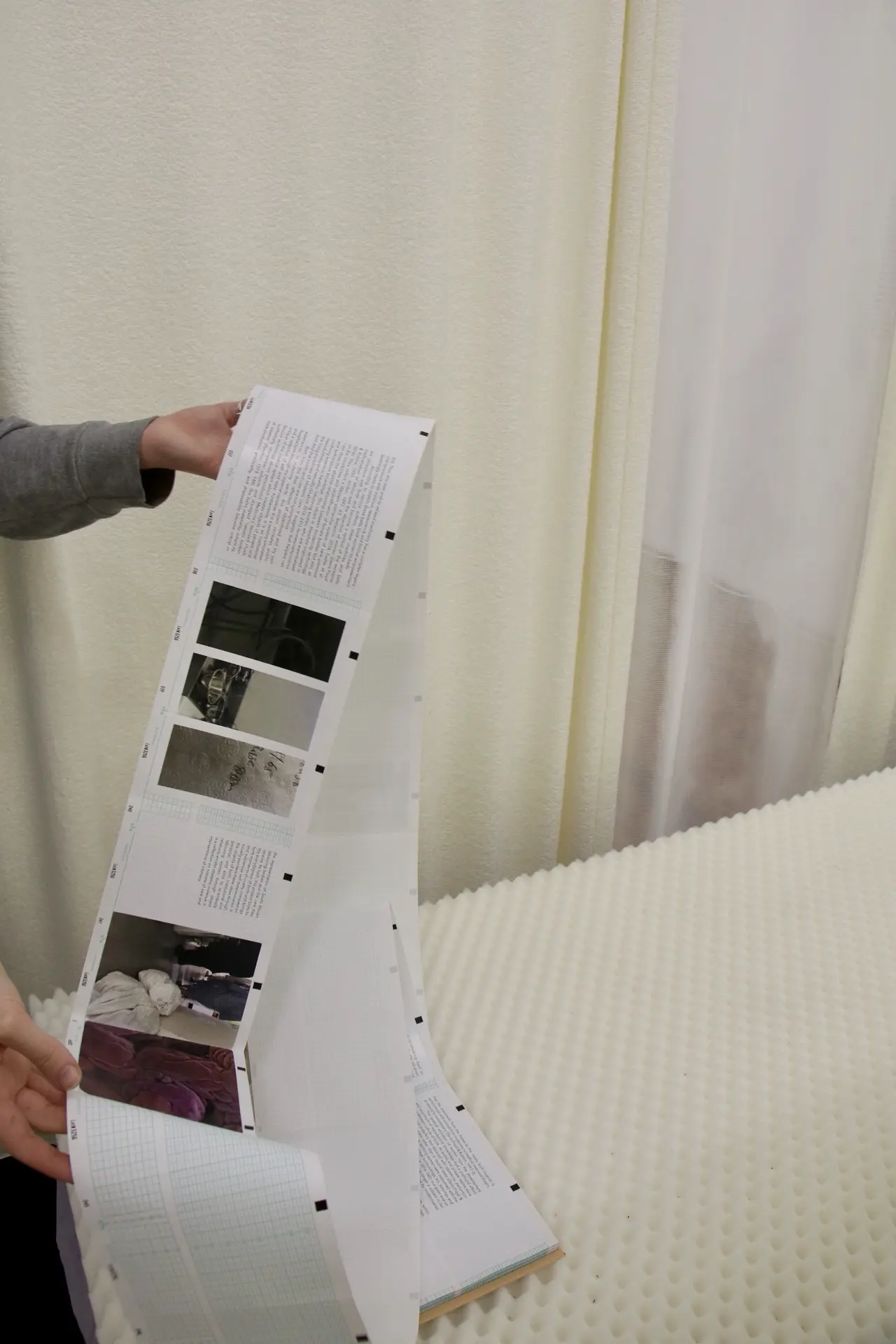
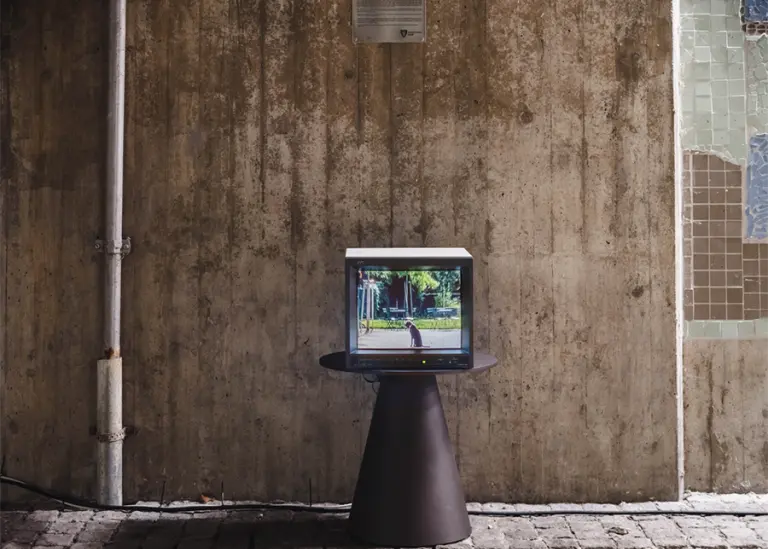
Within & Against (2022): A Nobel Week Lights public installation at Serafimerstranden, Stockholm, collaborating with Konstfack, KTH, and Stockholm University.
NZ: What role do texts play inside an exhibition, and when do they become exhibitions themselves?
I think there’s a very formulaic way that text is currently used in exhibitions that I’ve grown tired of.
At the same time, I do think text helps guide audiences through what they’re encountering. Language can provide that access. But I’m exhausted by the standard didactic format of exhibition writing — the very obvious structure of: what are you looking at, why are you looking at it, and why is it relevant. There’s something incredibly repetitive about that mode of writing.
When I was working on the exhibition for Vaginal Davis, who is also a writer, we approached text very differently. Rather than writing explanatory wall texts, she wrote a kind of narrative that moved through the exhibition. It wasn’t overly prescriptive about the works themselves. It functioned more like another layer running parallel to the exhibition — almost like another storyline that guided the experience emotionally and atmospherically rather than instructing the viewer.
That completely shifted the way I thought about exhibition texts. If you were to remove all the images and installation shots from a catalogue or monograph, what are you left with? Would the text still be interesting enough to read on its own? That became an important question for me.
In Vaginal Davis’ case, absolutely — the writing held its own because it operated as a story rather than as an institutional explanation. I think that’s where text begins to move toward becoming an exhibition in itself: when it stops functioning purely as interpretation and starts creating another experiential layer or world.
At the same time, I don’t think every part of an exhibition needs to carry the entire burden of meaning. Sometimes we ask too much of exhibitions themselves, or too much of texts. Everything works together. I think hierarchy becomes the problem — the assumption that the exhibition is primary and the text is secondary. Why can’t the text itself become the central work?
There’s a project by Simon Baker, who used to be the curator of photography at Tate, where he reconstructed an exhibition from a publication. He effectively used a interviews as the exhibition's source code rather than producing a publication after the exhibition had already taken place. I found that reversal really exciting because it completely flipped the hierarchy between exhibition and publication.
“What fascinates me about publishing is the intimacy of it. Someone might go to an exhibition and experience something publicly, but a publication enters private space. Somebody might sit in bed at night reading it or fall asleep with it beside them. That feels very intense to me. If I make something that someone lives with privately like that. Suddenly the work exists inside someone’s personal space. There’s something very interesting to me about that kind of closeness and permeability.”
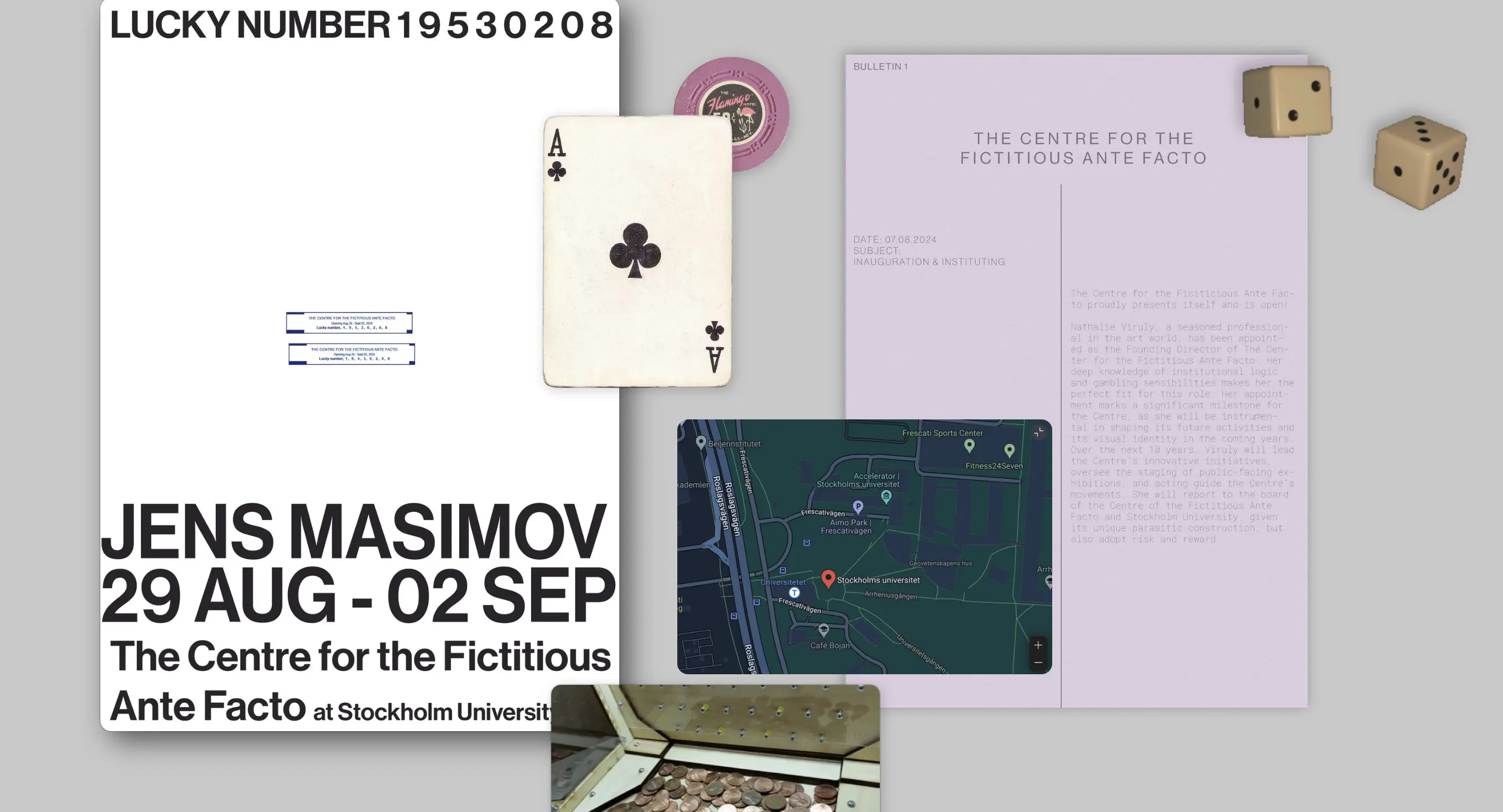
Centre for the Fictitious Antefacto (2024–2025): A para-institution founded by Nathalie Viruly at Stockholm University, curated by Bad Federation for Norbergfestival 2025.
MR: How has moving between different geographies (Cape Town, Sweden) shaped your curatorial sensibility?
Cape Town and Sweden are very different in rhythm and culture. It probably would have been a completely different experience if I’d gone somewhere like New York, but what interested me was that both Sweden and Cape Town actually have very small art scenes.
There were aspects of the infrastructure and support systems there that made me realise how precarious things can feel in South Africa. But at the same time, parts of the Swedish scene also felt very stable, almost too stable sometimes — a bit one-note. There’s less urgency. Less improvisation. So moving between those two places made me more realistic, I think. There were moments where I imagined that things could simply be ‘better’ elsewhere, but then arriving somewhere else made me realise that no context is perfect despite idyllic notions.
I think both places ultimately pushed me toward relying more on myself — as a pacemaker, a rhythm-maker, somebody who pushes things forward rather than waiting for a context to do it for me. If you want something to exist in a certain way, you often have to build it yourself. At the same time, I constantly borrow from both contexts. I don’t think I could do the work I do without either of them.
What Sweden ultimately gave me was a model for care, support, and institutional responsibility. What Cape Town gives me is adaptability, experimentation, and the understanding that sometimes you have to build the structures you wish existed yourself. I think my curatorial sensibility now exists somewhere between those two conditions.
MR: Do you notice differences in how audiences engage with exhibitions across these places?
One of the biggest differences I noticed in Sweden was that art felt much more integrated into everyday life and into family life. You would go to gallery openings, artist talks, museums, bars connected to cultural spaces, and there would be children everywhere. Babies at evening artist talks, toddlers running around galleries — it was completely normal.
That was really jarring to me because in Cape Town, those spaces often feel much more formal and socially coded. Gallery openings here don’t necessarily feel like places where children are welcome. Heck, who is? In Sweden, they are social democrats, so art isn’t treated as this highly exclusive environment in quite the same way. I really appreciated that because it made cultural spaces feel open to multiple levels of society rather than just a very specific social scene. I also noticed that audiences there seemed much more accustomed to experimental and interdisciplinary forms of work.
I saw a lot of performance art in Sweden that I had never encountered before, and audiences were already primed for those experiences. There were all these strange hybrid spaces — poetry readings in old houses where everyone would drink soup, buildings where publishers, exhibitions, music events, and performances all existed simultaneously. One place hosted baby raves during the day downstairs, upstairs there were publishers working, and somewhere else in the building there was a sound booth. There was a looseness to it. The spaces didn’t feel overly formal. Everything could coexist.
Whereas in Cape Town, there’s often a stronger sense of prestige and social positioning attached to exhibition spaces. I think what becomes complicated in Cape Town is that openings often function more as social environments than as spaces for deeply engaging with the work. I’ve actually started developing rules for myself around openings because I realised I was barely looking at the work properly - you’re talking to people, networking, greeting friends, listening to speeches, moving quickly through the room. Afterwards, people ask for your opinion, and you realise you haven’t actually spent meaningful time with the exhibition. I think there’s a certain dishonesty in pretending you can fully absorb all those layers at once.
So, I think the difference between those audiences and contexts also made me understand my own pace better. Both taught me something important about attention, publics, and the conditions under which people actually encounter art.
NZ: Are there formats or mediums you feel drawn toward right now?
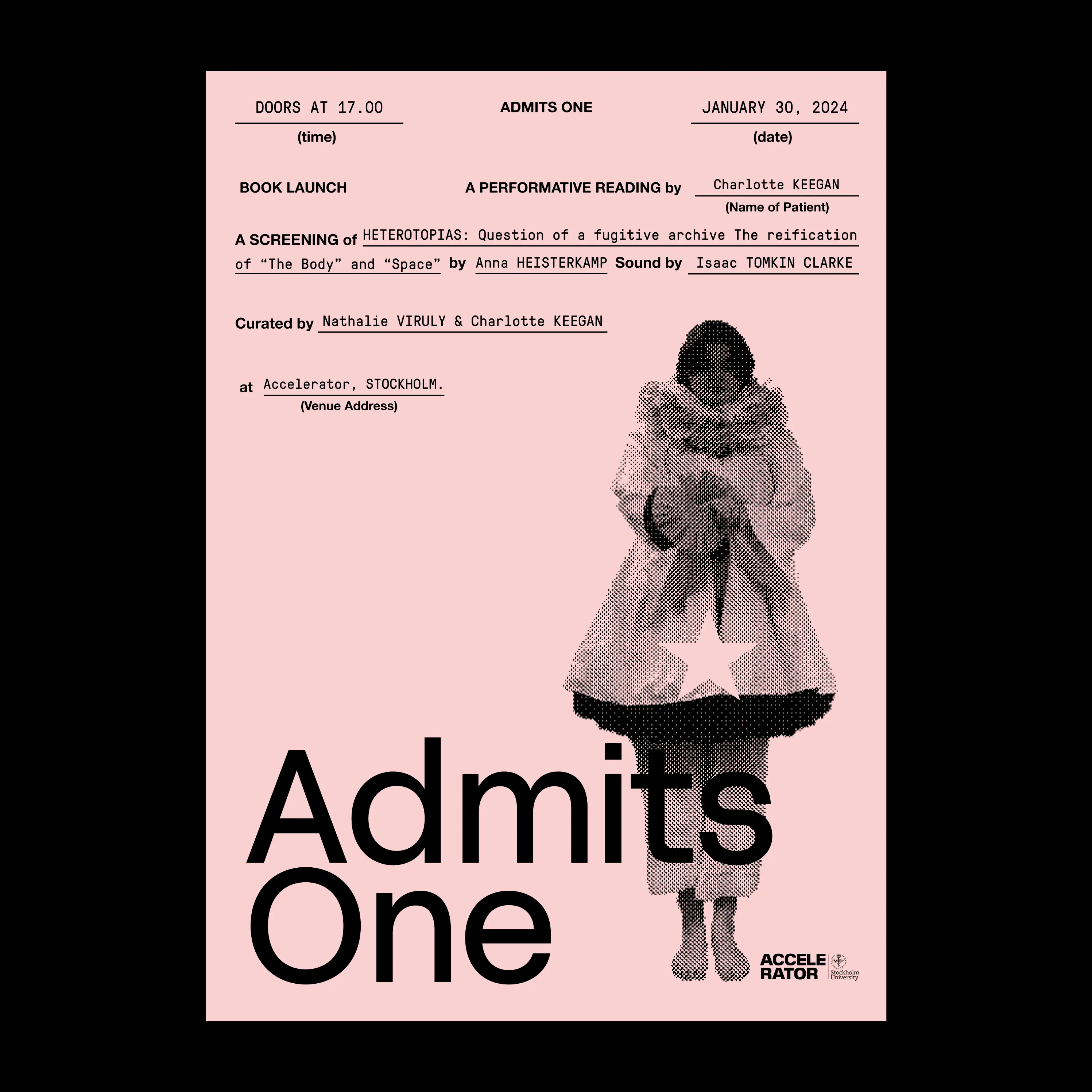
Penny Siopis’ film works; the works with found film material spliced together with subtitles and text, one is called 'Obscure White Messenger'. I was completely absorbed by that work — partly because of the found material itself, but also because of the sequencing. What became apparent to me over the last few years is that the thing I’m most drawn to is sequence. Things that move in sequence. That’s definitely books, but also film, moving image, kinetic sculpture — works that unfold over time.
Film has especially become really exciting to me. I don’t think I know as much about film history as I’d like to, yet, but working on the moving image exhibition with Vela Projects became a really important entry point for me. It opened up a way of researching film on the continent and internationally. So, I think I’m increasingly drawn to things that are in motion. There’s something compelling to me about works that have vectors and direction — works that are willing to move somewhere and eventually say, ‘That’s enough, that’s finished.’ I think there’s something quite strong in that.
A lot of contemporary discourse is about openness and non-linearity — the idea that viewers should be able to enter and leave wherever they want — but I actually quite like sequence. I like the idea that there’s a beginning, a middle, and an end. Maybe that’s slightly authoritarian, but hopefully benevolently so. I think I’m attracted to works that guide people somewhere.
Storytelling is central to that. Not necessarily storytelling in a conventional narrative sense, but in the sense that something unfolds over time and carries you with it. Painting can absolutely function that way too, and curatorial arrangements, but I think the sequencing becomes more explicit in mediums like film, books, cards, or moving image.
MR: If curating were a verb outside the art world, where would you apply it?
Curating as a term has already escaped the art world. Everyone’s a curator now. Pinterest boards are curated. Playlists are curated. People make digital collages and suddenly they’re curators. It’s become this massively overextended, ‘dirty’ word — a bit like ‘aesthetic’ or ‘creative director’. Everything falls under it now. So honestly, part of me wants to put the word back inside again. Not because I want to create barriers to entry, but because I think there’s a difference between barriers and criteria. Curating is a medium in itself. Space is someone’s medium. The exhibition is someone’s medium. And I think that deserves a certain level of seriousness and restraint in how the term gets used.
At the same time, I’d probably be excluded myself if the field became too rigid because I didn’t come from a traditional art history background. I’m very aware that there are multiple ways into curatorial practice. But I do think the term has become bloated.
Laura actually explained this to me once through surfing when I was having a complete existential crisis about whether curating even means anything anymore. She said the art world is like the ocean and everyone in it is surfing at different levels.
Some people are beginners on surfboards at Muizenberg, just trying things out. Some are intermediate surfers, figuring things out seriously. Some are professionals. Everyone can technically surf at the same time, but there are still rules and levels of responsibility. You don’t drop in on someone else’s wave. You recognise when someone has developed a level of skill and practice that requires space. I think that analogy really stayed with me because it made me realise that maybe the issue isn’t that everyone wants to participate — participation is good — but rather that we need better language around depth, intention, and practice.
So, if curating were a verb outside the art world, I think I’d apply it to construction – building meaningful structures for people and ideas to encounter one another responsibly. Not just collecting things. Not just arranging aesthetics. But creating pathways, rhythms, relationships, and conditions for attention. In that sense, I think curating already exists far beyond exhibitions.
It exists in education, publishing, hosting, conversation, urban life, research, and even friendship. But I also think we need to protect the seriousness of it a little bit. Because when curating becomes everything, it risks meaning nothing.