in conversation with
Paul Wallington
Paul Wallington (b. 1993) is a South African painter living and working in Cape Town. Working predominantly in oil and acrylic, his paintings bring together fragments of imagery drawn from literature, film, art history and the accumulated contents of his studio.
His paintings operate somewhere between the recognisable and the estranged. Familiar figures, objects and scenes are pulled apart and reassembled, their original contexts giving way to something less certain. Drawing on the visual languages of artists such as Marlene Dumas and Chantal Joffe, Wallington allows images to mutate through the act of painting, where the boundaries between reference and invention, fiction and reality, begin to blur.
More recently, his work has explored the associative possibilities of images, bringing disparate visual fragments into unexpected proximity. Rather than offering a fixed narrative, his paintings leave room for the viewer to navigate their own connections, moving between the personal and the collective, the remembered and the imagined.
We spoke to Wallington about image-making in the present moment, the relationship between painting and the world around us, and the role of art in making sense of the now.

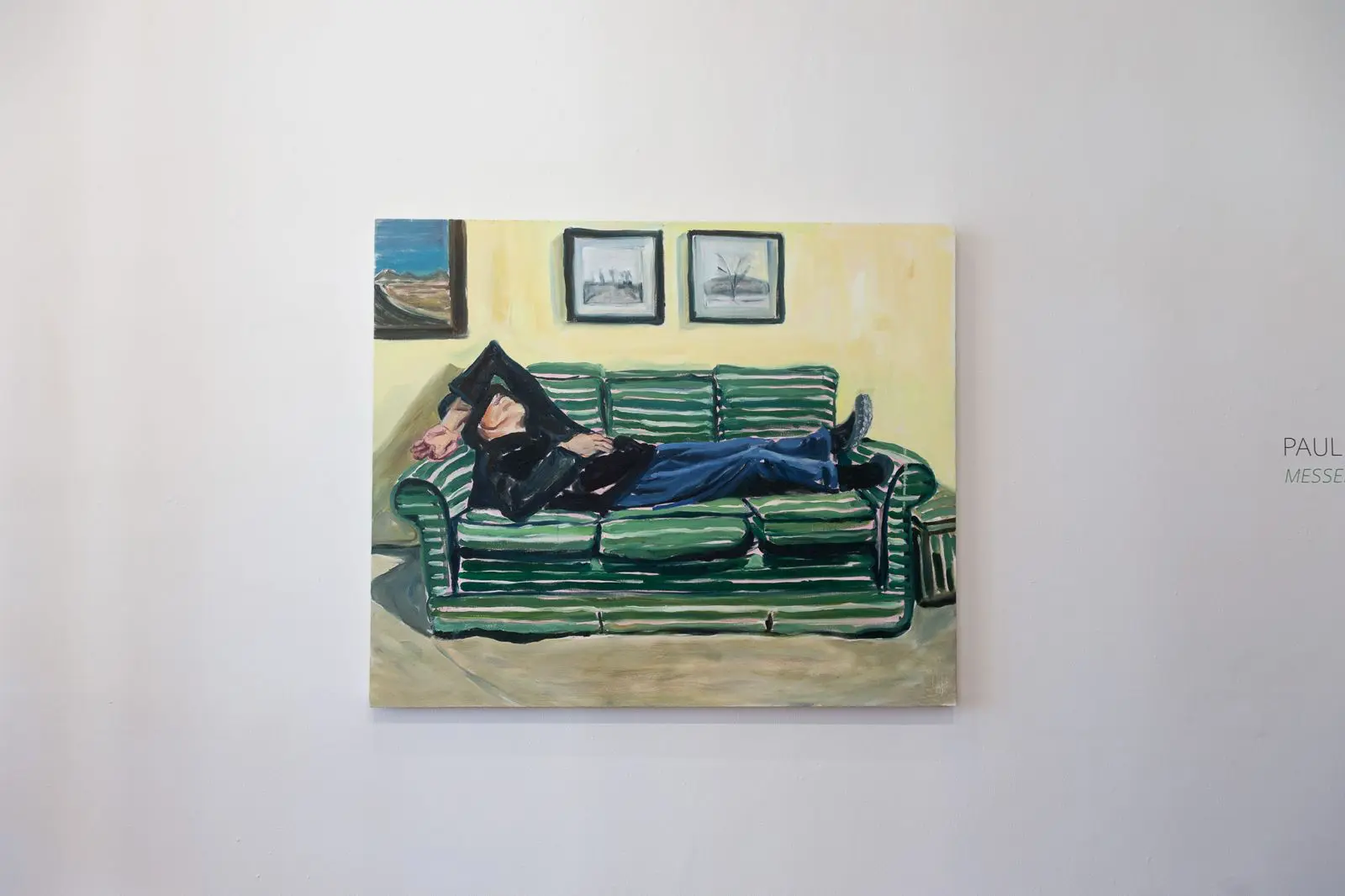
Homesick, 2026, oil and acrylic on canvas
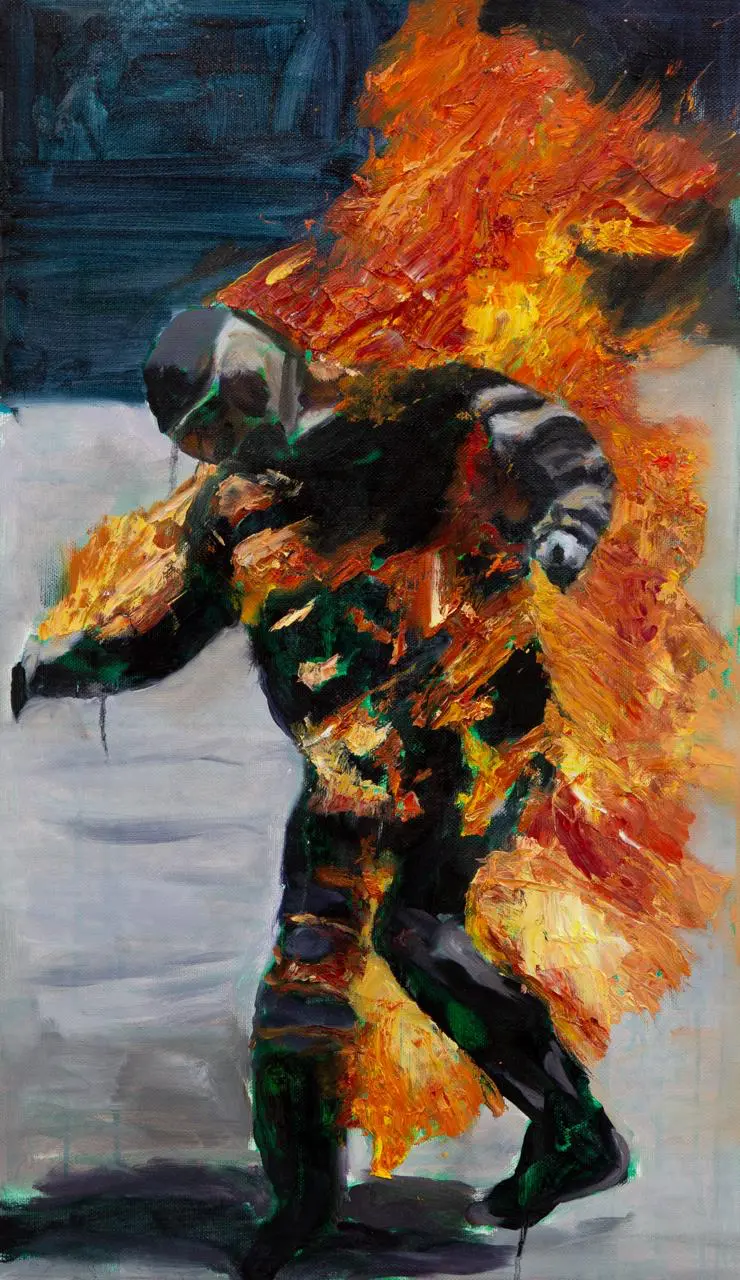
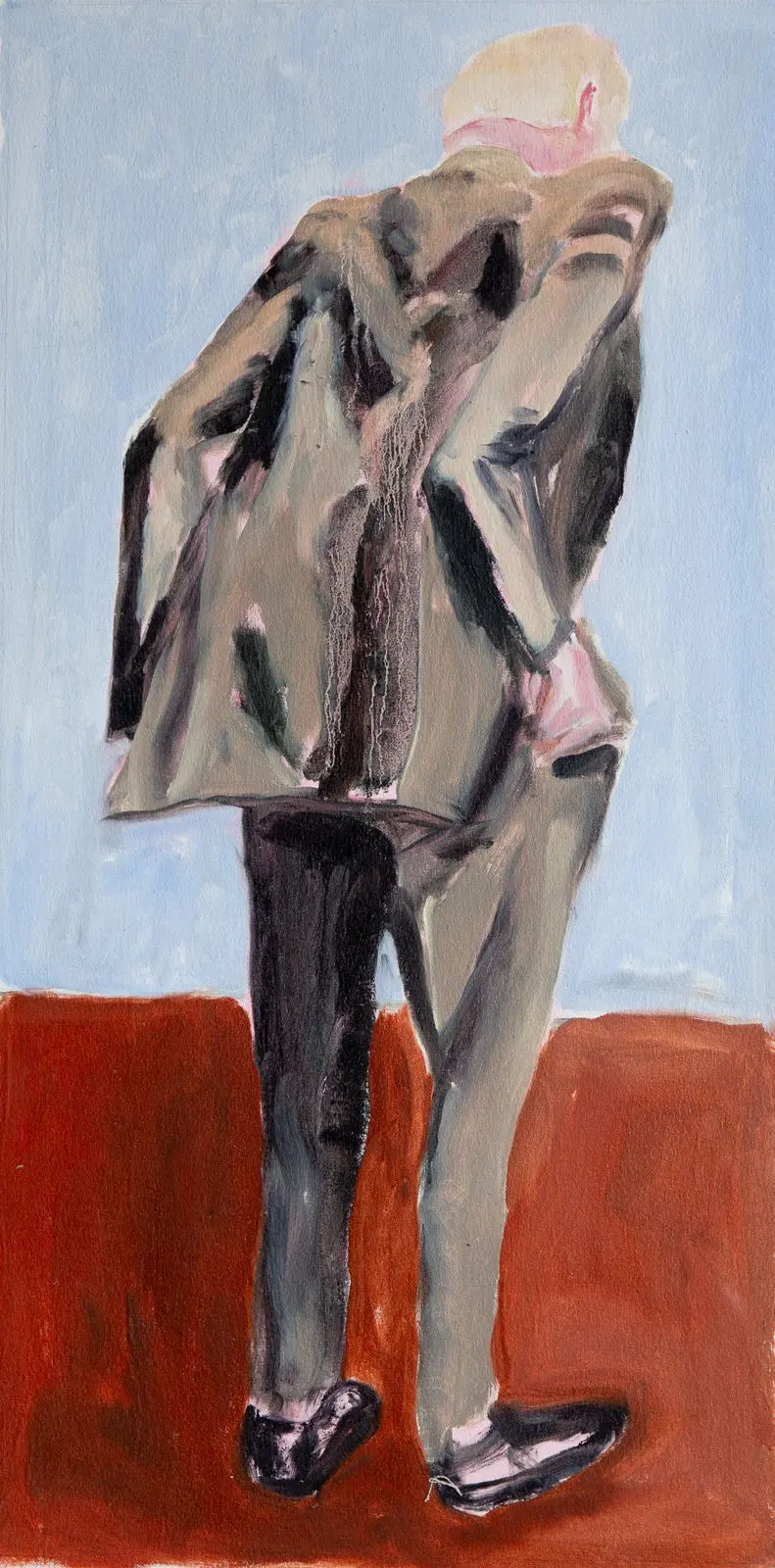
NZ: Your paintings often act as a commentary on “the now”. There are the eclipse glasses works, and the series with the faces we saw at 99 Loop last year. What's something you've always wanted to capture but never feel you've done successfully?
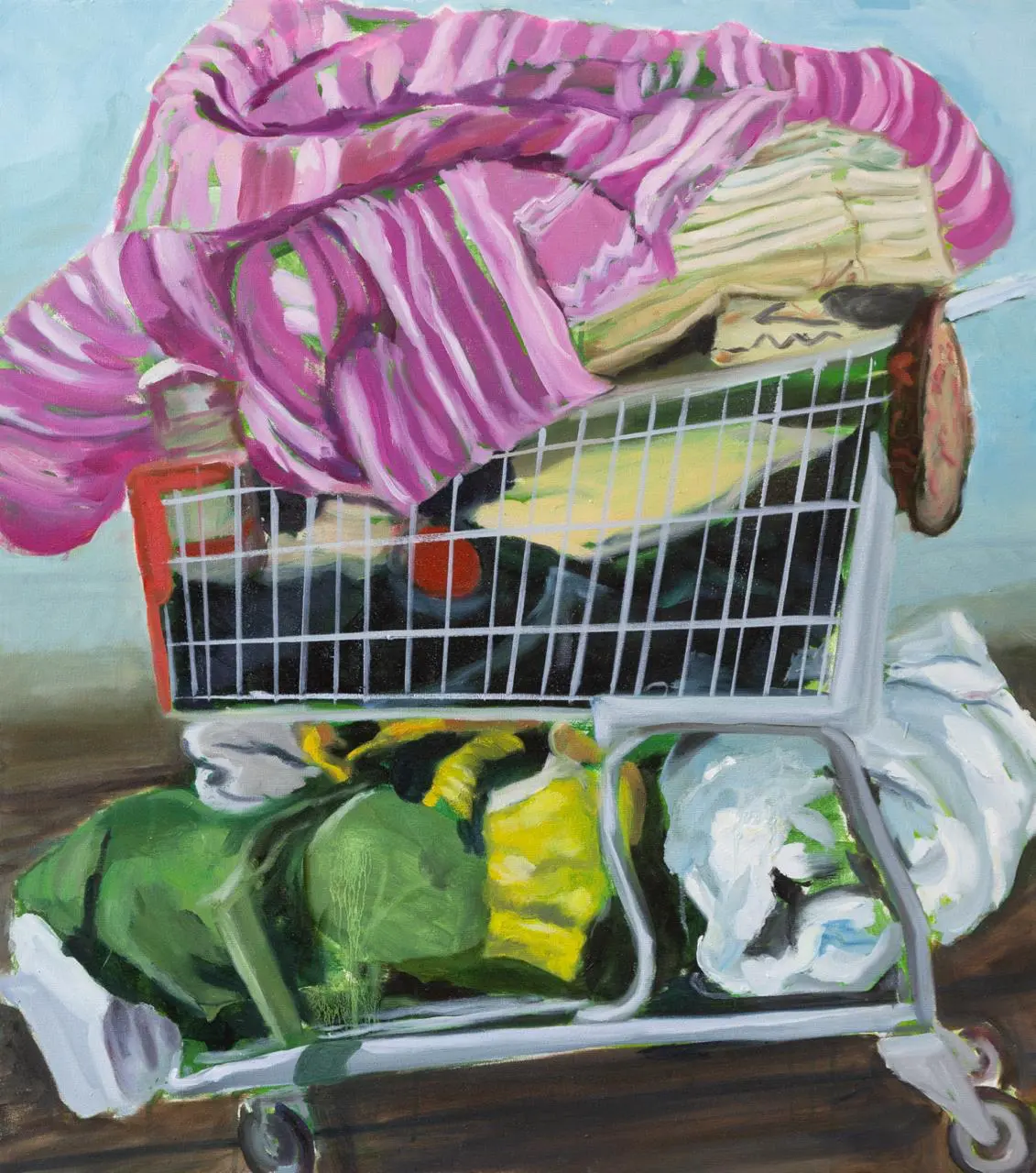
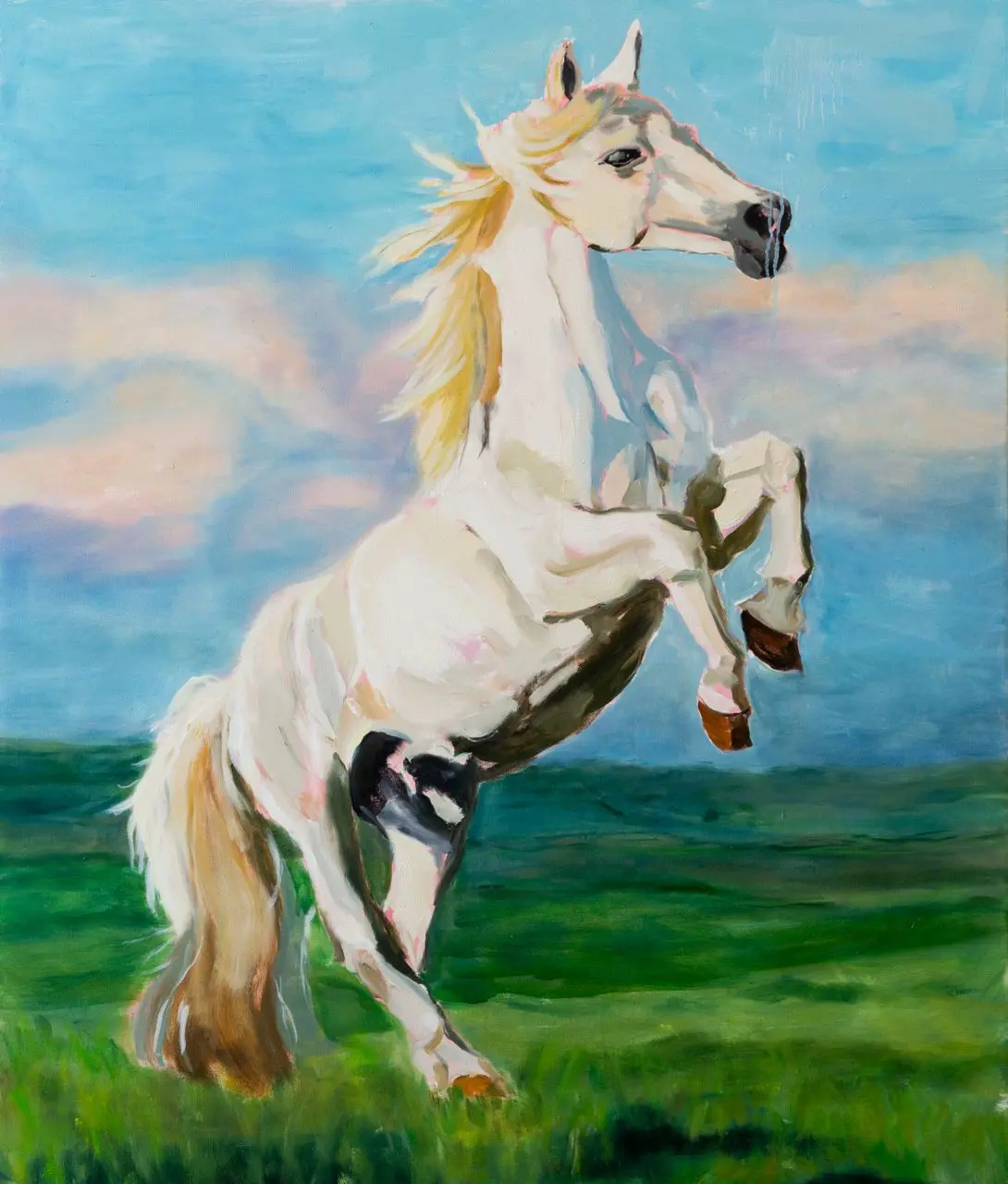
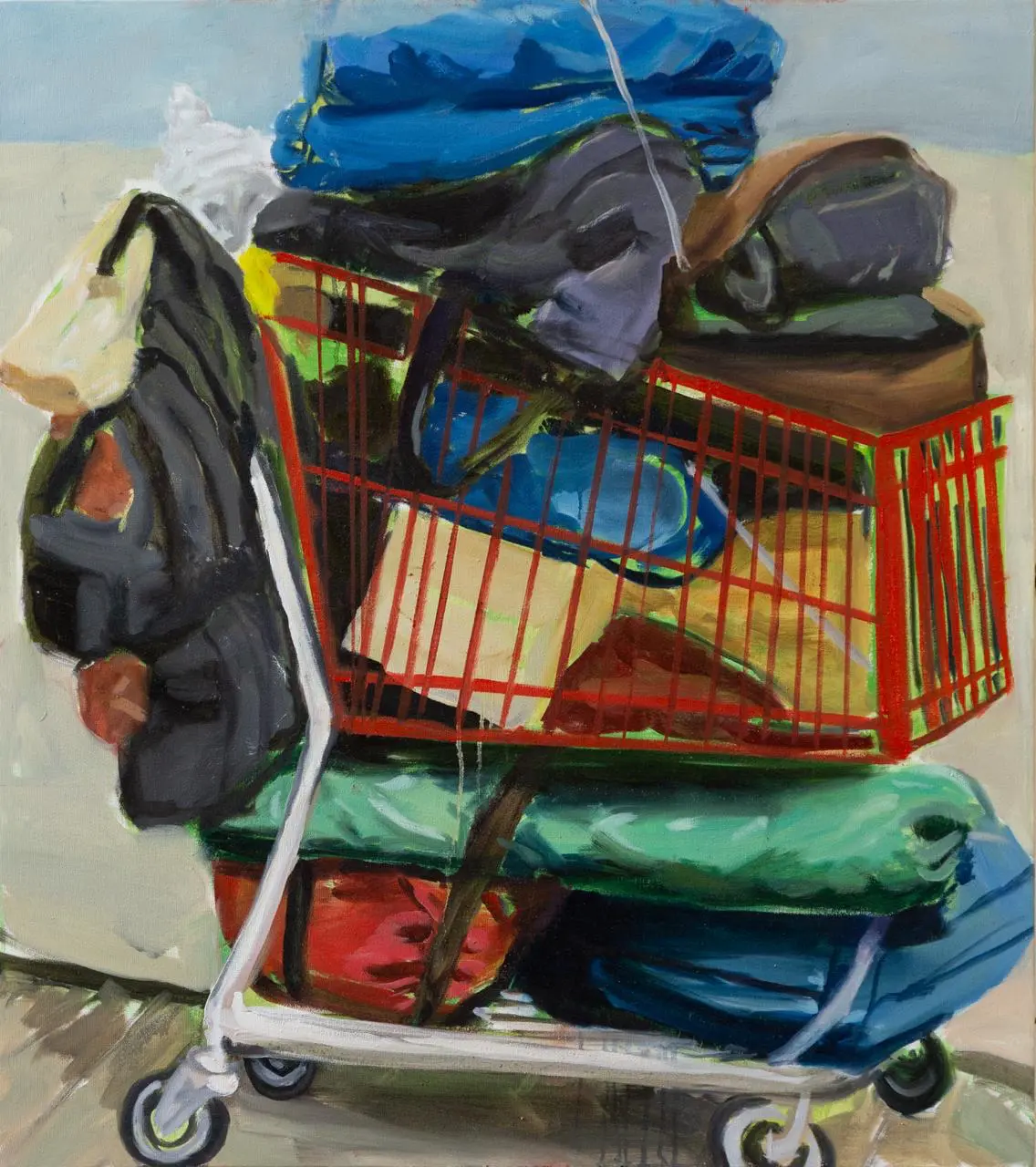
I think it is “the now” — what it feels like to be alive right now. I don't know how to capture that. That was the whole point of my master's work, to capture this contemporary moment in society. It got quite didactic in some ways. I wasn't trying to be, but the horse next to the two shopping carts, for example, is fairly obvious. The idea was "this is what freedom looks like." The carts are actually homeless people's shopping carts, so I was commenting on the economy. On Instagram I tried to communicate that idea more and more through memes, adding context. Do you know Gary Stevenson? He's so depressing, he just talks about how everything is getting worse.
NZ: There's a commentator like that who makes compilations on Instagram that lead you to his Patreon — Brad Troemel.
Yes. I was really influenced by how he thinks, by creating a narrative or theme around what you do. I read blogs too. I'm trying to fold all of that in so it's not just isolated paintings.
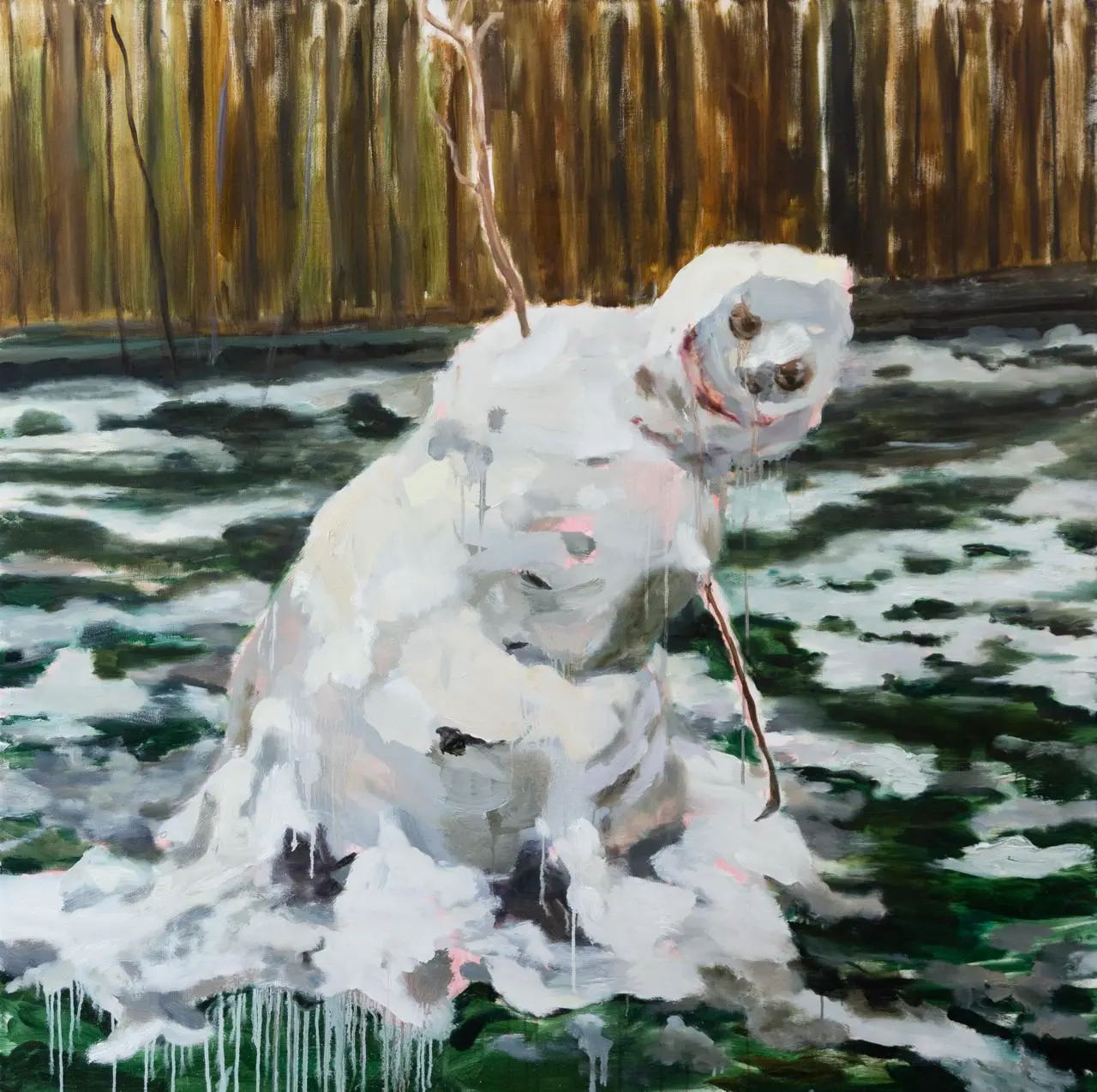
Then I started on the snowmen. I was getting a feeling of loneliness or isolation, but in a snowman, and I thought I could do a whole series of snowmen. The series idea grew in my head, rather than a single image.
NZ: What do you feel you're not capturing in your recent work?
For the Knysna show, it was the paintings of my mom, my brother and the flowers from where I grew up. I wanted to capture the town, but what I really wanted was the feeling of losing it, because my parents don't live there anymore. That loss, that sadness. I think the bats, the men walking away lost, and the sandcastles get closer… The sandcastles are almost Gothic, like a decaying memory.
Have you read The Childhood of Jesus? It's by J.M. Coetzee, who was always a big influence, a South African guy. It's a trilogy and the second two books are so boring, don't read them. But the first was interesting. All these people end up on an island with no memory, forgetting where they've come from. There's an old man and a boy, and they're trying to find the boy's mother. You think the boy's going to be Jesus, but he never becomes Jesus. I was so annoyed. I thought he'd bring a bull back to life, and he doesn't. But, I like the idea of people whose memories are gone after some big event, who are trying to remember or don't really want to. In the end, I guess I wanted to capture all of the contemporary now somehow. I don't know.
If only we could have done this sooner, 2025, oil and acrylic on canvas
NZ: Where do you get your subject matter from? You're naturally interested in a lot of contemporary discourse, like America and AI. Where does that fit into your work? What starts the itch to make something?
It used to come from books. A lot of it was South African, a way of understanding, or wanting to think about, the world - the [paintings of the] two-headed cow, the scary man in the room, the "e-boy" with the dangly earring. I've always been obsessed with my favourite media, like Adam Curtis, which asks why we're here, where we are in society right now, and how we arrived here. There's a YouTuber called Elephant Graveyard who does this very well. He breaks apart Joe Rogan in a very interesting way.
So how do you communicate the feeling of contemporary life, of being confused or overwhelmed? Why is everything a bit shit and more expensive? Why am I getting so many Instagram videos about an AI centre in Israel? I don't care about this, why is it on my feed? Why am I on Instagram all the time? Why can't I sleep properly? I'm interested in contemporary culture, but the fracturedness of it. It's almost schizophrenic, and there's a real scariness to it.
The two-headed cow was part of Meanwhile Syndrome, the show I did in Hamburg with a young gallerist. It wasn't about TikTok. The idea was doomscrolling, and how that looks in images. I painted the bad stuff, weird stuff, two-headed cows, explosions and fires. But it was the same with the bats and the people walking away: it's about the image. We live in a world so image-dominated that if you paint an explosion or a decapitation, it's too much to look at and everybody's numb to it.
So you paint the peripheral, something that speaks to that image. The people looking up were a literal version of that, people looking at something they can't see or figure out, like the sun, which is too bright to look at. That grew into the recurring motif of people being confused by things.
I'm pretty confused by a lot of stuff, and I don't really know what the hell is going on in my life. It's pretty freaky. I'm trying to communicate that. It's a motif I can do again and again, differently each time, and I think that's important. There's a way through it.
Sometimes I ask myself why I'm painting something. People send me an image, like a squished rat, and say "paint this." But the squished rat will always be more interesting than my painting, because of the way we consume images through the internet. It just sits there, it's done. With something like a bat, or the sandcastles, there's more I can go into and spend time on, which is quite nice.
“So how do you communicate the feeling of contemporary life, of being confused or overwhelmed? Why is everything a bit shit and more expensive? Why am I getting so many Instagram videos about an AI centre in Israel? I don't care about this, why is it on my feed? Why am I on Instagram all the time? Why can't I sleep properly? I'm interested in contemporary culture, but the fracturedness of it. It's almost schizophrenic, and there's a real scariness to it.”
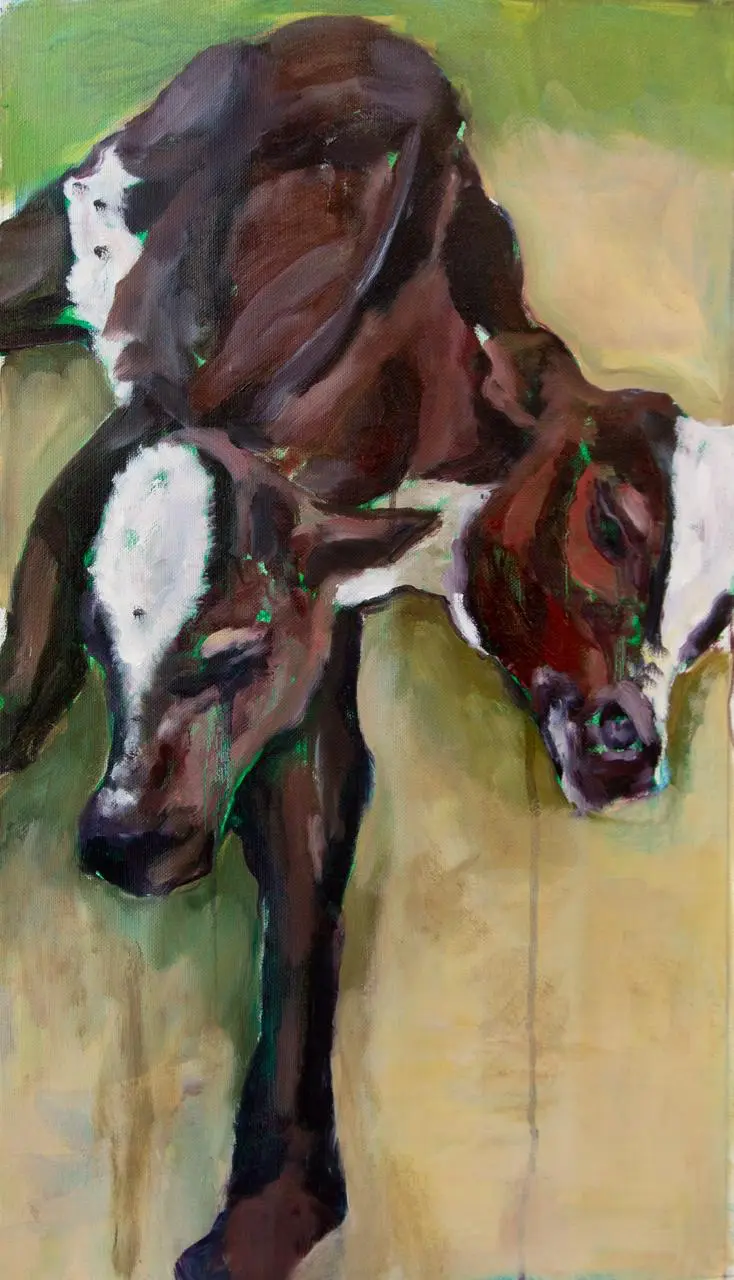
We can make it work, 2023, oil and acrylic on linen
MR: Tell us more about your time in Hamburg and the body of work you produced while abroad. How did your work develop there?
It was the first time in my life I was close to being really lonely. I still had an institution and a friend from South Africa I was close with, but it was the longest I'd ever been alone. Sometimes in Germany I'd walk around looking at people thinking I could be in an alien place, that I had zero connection to them. Part of me thought Germany would feel familiar, since I have roots there on my mom's side. I thought, European, right? Was I wrong? So there was a cultural isolation, and I was dealing with that. My work has always been a bit about loss, and about feeling misunderstood or a little sad, like the snowmen.
The technique changed a lot when I went there. My professor was Anselm Reyle, and if you look at his work, his art talks about the market in an honest, unfiltered way. He speaks to art as a commodity — which was the opposite of my experience at Michaelis. I think that's pretty important, especially for artists growing up in institutions.
He told me my work was good but "too much suffering." I'd been painting over and over for months, thinking that's how you do it, and he said “absolutely not”. He told me to use a projector and start making images very quickly. It was funny, delivered in the German way: "no need." For him that was so you could make more money. It didn't make me more money, but it made me work in series, going in on a single bat again and again.
That connects to Marlene Dumas, who's been my main influence for the last couple of years, along with Chantal Joffe. Dumas has painted faces for thirty years, and it's not even about the face, it's about the whole way she paints it. She has these skulls too, and they're so good.
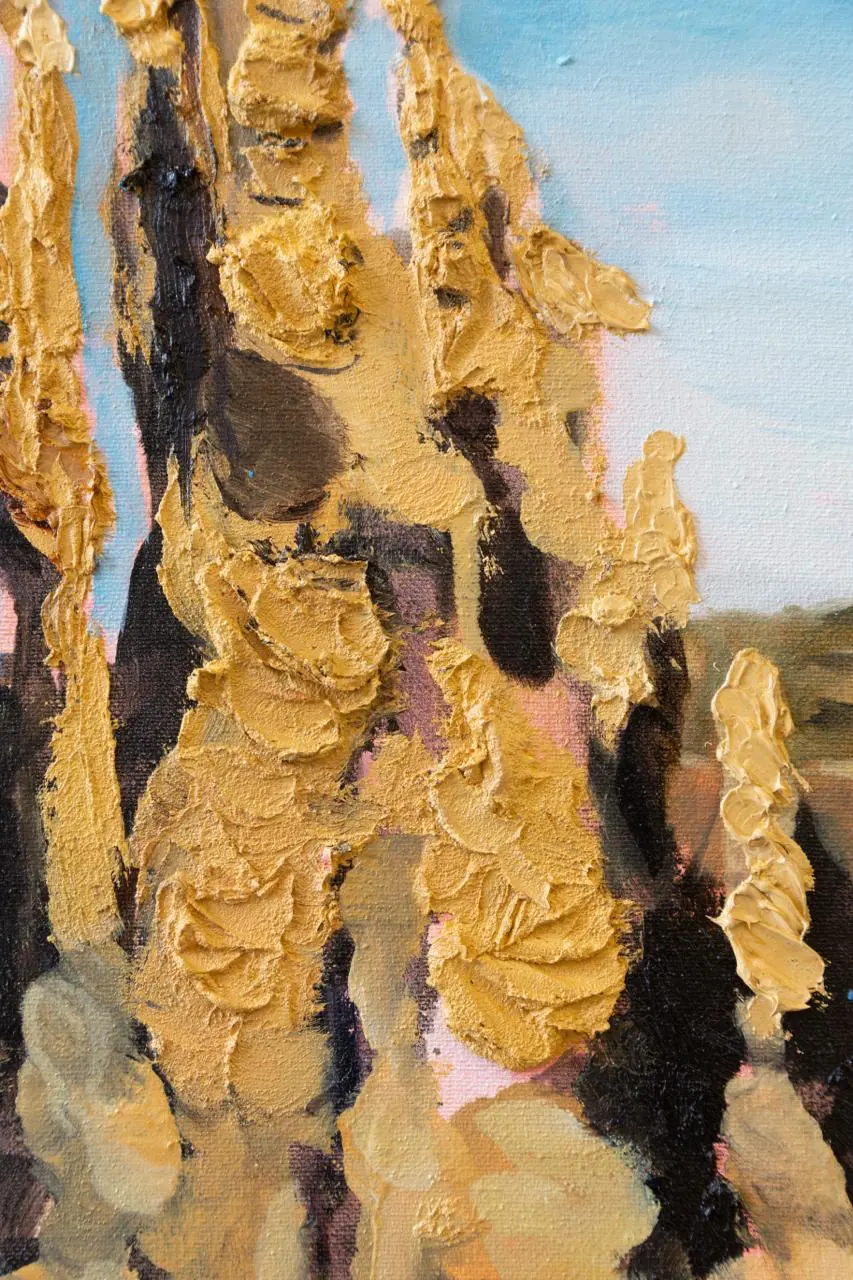
“My work has always been a bit about loss, and about feeling misunderstood or a little sad, like the snowmen.”
MR: People and animals are a large part of your paintings. Is there a world in which you depart from that?
I'd like to be abstract, and I sort of already do it. I paint still lives sometimes, but mainly it's people and animals. Animals are always emotional. When a dog dies in a movie, everybody is sadder about the dog than about the person. Maybe it's because they're pure, and maybe because there's something of ourselves in them. I don't know what the psychology is. With people, it's like Chantal Joffe, who mainly does portraiture. The face is so interesting, and it's fun. She makes these really big, weird faces. She lives in London and was at the RCA.
NZ: What part of your practice makes you feel insane?
Honestly, the economic pressure. "I've got to pay rent next month. This sucks. What am I doing? Maybe I should have a kid." When you're younger, painting is everything, and now it's not everything. I like painting, but for the last couple of years, even during my master's, I kept saying I was done, and then I'd find myself painting again and wanting to paint more. It's how I've learned to express myself and think about the world, so it actually keeps me a bit sane. I have an outlet. The technique helps too. I can make a painting in a day sometimes, and I like moving through something fast. If I overfixate on one thing, I think, "I don't give a fuck, next one."
NZ: You've shown your work in Germany, Spain and Denmark, and more recently you lived in Hamburg, working in two coffee shops while finishing your degree. Did moving away from the contexts you've known most of your life change the way you approached painting?
Some of my earlier work was very influenced by the institution I was at. You have an idea and then make work about that idea. I never really worked like that, but I sometimes thought that way. Now I'm working through a series, or a feeling. The show I'm doing now is mostly about Knysna, but mainly it's about loss, and how to communicate that feeling of being a bit sad. My favourite art forms, mainly movies and songs, all communicate the same feeling for me: loss, heartbreak, longing. They just do it in different ways — I've always been making work about that idea in different ways, and maybe it became clearer after I finished at university in Hamburg. I'm trying to be clearer about it.
Second, my whole life changed. When I left for my master’s, I was in a long-term relationship. We lived together and had two cats, not a dog. She worked at a big agency - it was the picture-perfect boyfriend and girlfriend life, and then I went to Hamburg. The first year I lived in some guy's gross apartment, then in a commune. I got to be a bit of a kid again, hanging out with 21-year-olds, and I felt pretty old. I couldn't drink because I had work the next day. My life had been really sheltered. My mom was helping me pay rent, and it was post-COVID, 2020 and 2021, when no one expected anything of anybody. I was going to a studio and making a bit of money from shows, enough to live off, though not to pay rent. It was a chill two years after graduating, with no pressure. When I went to Germany, the masks dropped and it was officially over. In my master's I started freaking out a bit: “what the hell am I doing with my life?”
MR: You also have some background in film. Tell us about that. Does your interest weave into what you do now, and would you go back to it?
The things I like most are often not even paintings. Film is one of my favourite ways to consume media, and some movies have really changed my life. A big one for Meanwhile Syndrome was The Zone of Interest, about the Nazi officer who is the commander of Auschwitz. The whole film is set in his house with his family, their domestic life. It won at the Oscars, in 2023 I think. I watched it in Germany. It did exactly this thing of looking too close to the sun. There have been so many movies about the Holocaust and its violence, but this one stayed on the periphery. You only hear sounds, see smoke in the background, hear the train of people coming off. That made it so much more fucked up. It communicated something profound and horrifying by not showing you what they were looking at, not telling you explicitly.
MR: You're stuck in the limitations of their consciousness.
Yes, and it opens up the imaginative part of your brain. I feel we've been dulled by social media. Someone explained that Instagram takes your attention from you, whereas a book gives you attention and nurtures it. It has a spiritual vibe to it. Some people hated the movie and thought it was basic, but I thought it was profound.
I did video stuff with friends, but I was a student, and I never got into the professional side at all. I went straight to Michaelis afterwards. I got put off by the commercial side, and I knew that lifestyle wasn't for me. I've got friends who work on those shoots and get sick every time because it's so demanding. It's almost masochistic. Some of it feels like living in a Mr Beast video. There's a YouTube video explaining why Mr Beast is so disturbing, and it manifests how much people will do for money. Would you shoot your mother in the face for $10 million? It's borderline soul-selling, and it's just some dude called Jimmy running that. I'm very deep into YouTube: crime and commentary, and things like that. Some of the ideas from film still influence me, but I don't know if I'll ever go back to making it.
MR: To close off, how do you see your practice evolving?
I'm pretty confused by a lot of stuff, and I don't really know what the hell is going on in my life. It's pretty freaky. I'm trying to communicate that. It's a motif I can do again and again, differently each time, and I think that's important. There's a way through it.
I haven't thought about that for a while. I just want to do more of this, and get better at the series idea, making it more concise, more interesting, tighter. To be more coherent. The whole point of [my] work, in some ways, is to communicate an idea of what I'm feeling or seeing about the world. I'm more interested in communicating a feeling I have, so that someone else can experience it. Painting is me working through an emotion and figuring it out, and the figuring-it-out is the part I like most. Things don't always make sense.
“The whole point of [my] work, in some ways, is to communicate an idea of what I'm feeling or seeing about the world.”